

Three things you need to know
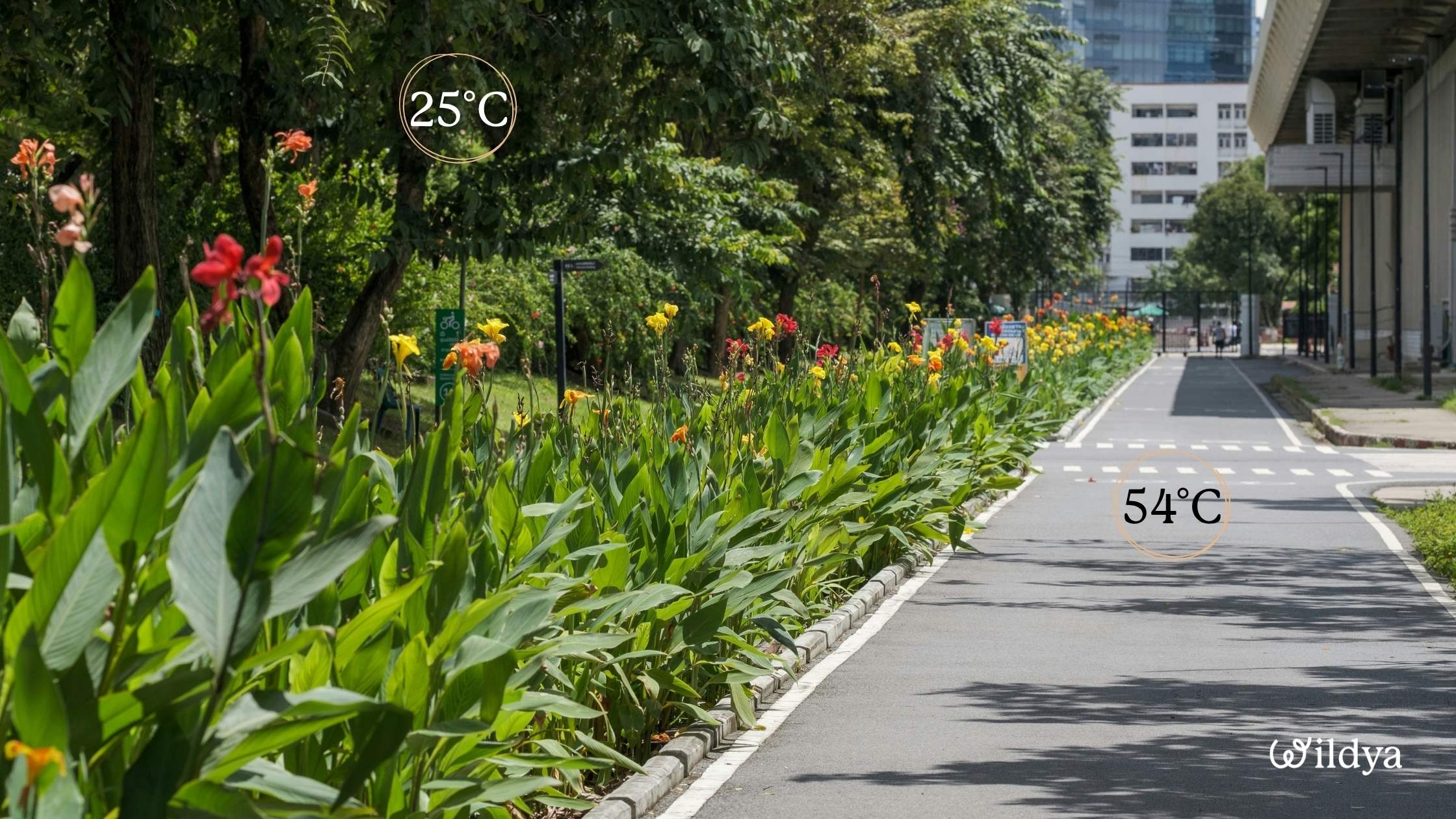
- Rewilding cities works, and the proof is dramatic. One SUGi forest held a London street at 25°C while the bare pavement beside it hit 54°C.
- SUGi has planted more than 265 forests across 65 cities with a team of just five people. Small teams can build big things when the model is right.
- You do not need the funding solved before you start. Elise grew SUGi through brand partnerships while she was still working out the money, and planted hundreds of forests in the meantime.
This article is based on a live Wildya masterclass with Elise Van Middelem, founder of SUGi, which brings dense native forests back into cities to cool the streets and give wildlife a home again.
Elise showed us what rewilding cities really takes, from the science of a pocket forest to the funding model behind a movement now growing on six continents.
Want more inspiring stories like this and tips to build or scale your nature venture in your inbox? The Impact Millionaire newsletter reaches 4,000+ nature founders every week.
How Elise went from luxury events to planting forests
Elise Van Middelem did not train as a forester. She spent years at Louis Vuitton, running events across 26 countries and staging 200 of them in three years.
That job quietly taught her the two things she would lean on later: how to build a coherent brand people want to be part of, and how to talk to companies that have money.
After Louis Vuitton she ran her own studio, building large art installations with artists. Her job was to take a big, sprawling project and pull it together under one clear story, so anyone walking past felt invited in rather than lectured at. 🖼️
For a long time nature stayed in the background, a childhood spent around her grandparents’ farm in Belgium and not much more.
Then the climate talk started to wear on her. She got tired of the noise and asked herself: “how much more are we gonna talk about it, and why don’t I just do something about it?”
So she did. She loved Kickstarter, the way you could back a project and then watch it grow on your profile, so her first idea was an app that let people fund a forest and follow it over time. 🌳
She poured a large, and by her own admission slightly mad, investment into building it.
The app hit a wall. A pocket forest takes years to establish, so the quick hit of “I planted a tree today” never came, and people drifted. Then COVID arrived on top of everything.
She went back to the one thing she knew from her old life, talking to brands, and rebuilt the whole model around companies adopting forests instead of individuals funding them through an app.
The first SUGi pocket forest started to grow in Beirut in May 2019.
Her years selling events were the compost these forests grew out of. Nothing she learned in luxury retail was wasted. It just got replanted somewhere with better returns.
What is rewilding cities?
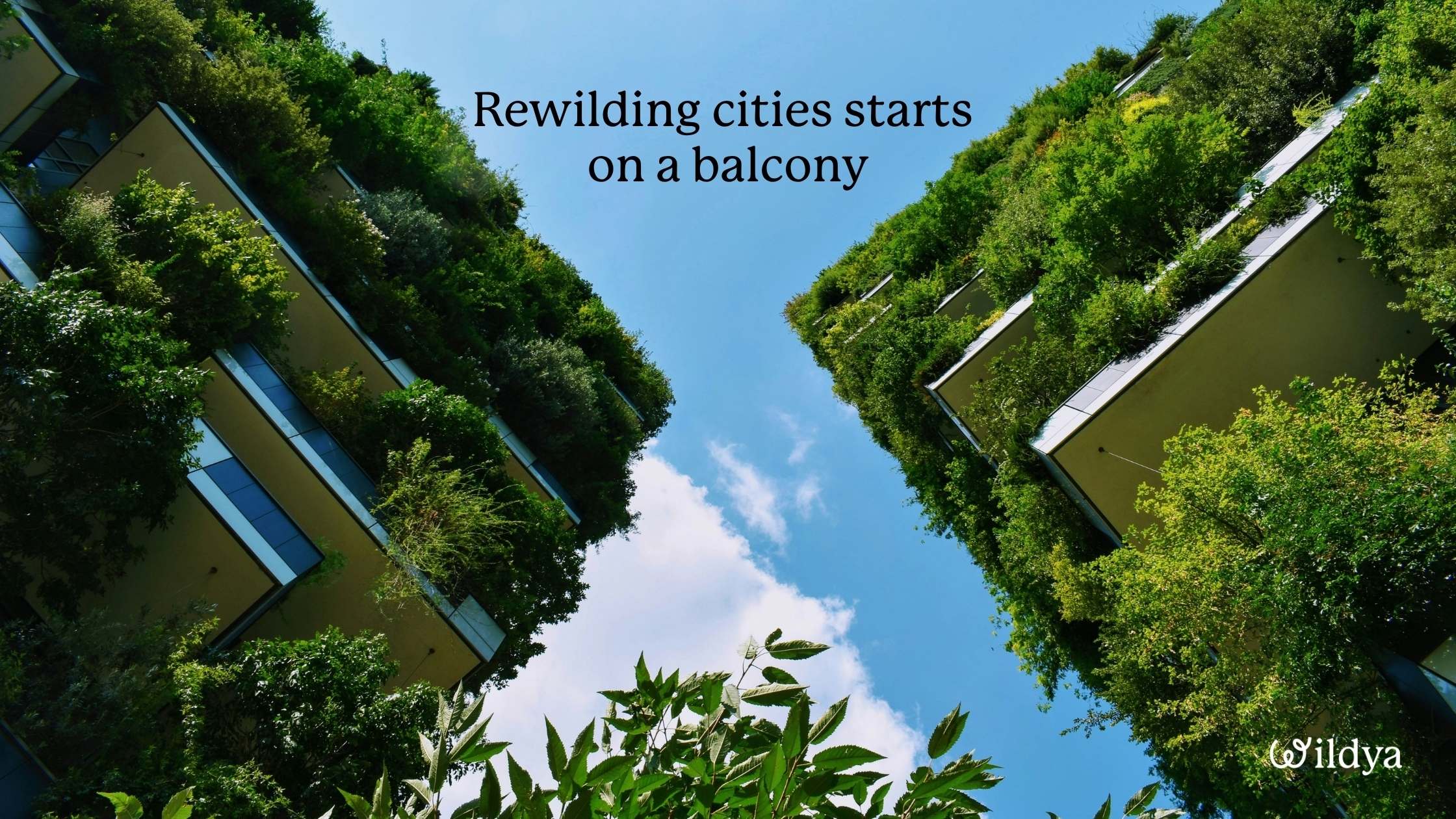
Rewilding cities means bringing wild plants and animals back into the streets, roofs and leftover corners of a city, so people and nature can benefit from the same ground again.
It is the opposite of the tidy, mown version of urban green most of us grew up with, where a lawn looks alive but feeds almost nothing.
For Elise and SUGi, rewilding cities rests on three promises she calls her triangle: biodiversity, climate resilience, and the well-being people feel around living things. 🐛
Miss one and the project is only half doing its job.
Rewilding cities starts on a balcony
You do not need a council, a budget or a spare field to begin.
Elise’s smallest example of rewilding is a single balcony. “You can even do it on your balcony,” she said, “just to restore a web of life: a bird to come back, or a bee, or a butterfly.” 🦋
This is the biodiversity leg of her triangle.
Plant a few native flowers in a pot and you have set a tiny table for wildlife. Native plants are the part that matters, because local insects evolved alongside local plants and often cannot feed on imported ones.
A native flower pulls in a bee, the bee draws in a bird, and a small food chain that had switched off quietly comes back on, like a light flickering back to life. 🌸
A packet of native seeds costs almost nothing, yet it can buy you a whole loop of life. One of our team tried it last season and within a week had caterpillars chewing the leaves, then butterflies, a full life cycle playing out on a windowsill for a few pennies of seed.
Scale that same instinct up and you get a pocket forest. Scale it up again across a neighbourhood and you get a city that starts to cool itself and feed its own birds.
Rewilding cities is really that balcony logic, repeated until it changes a street.
Why a living patch of ground feels different
Walk into a real, dense patch of nature and your body clocks it before your brain does.
The air is cooler and a little damp, and there is a smell of soil under a low hum of insects and birds. “The soil is alive and it smells, and there’s a buzzing to it,” Elise says. “You can just feel life, the web of life.”
That hum is a food web doing its job. Healthy soil is packed with microbes, the microbes feed the plants, the plants feed the insects, and the insects feed the birds. 🐦⬛
A mown lawn gives you none of that, because almost nothing actually lives in it.
This is the well-being leg of her triangle, and it is not a soft add-on.
Being near this kind of living complexity lowers stress and pulls people back outside, which is why a rewilded corner rarely stays empty for long.
One SUGi forest in the United States, planted with Native American knowledge beside a correctional facility, now grows 26 different berries that get turned into teas for the elders. In four years, a patch of dead city ground turned into both a pharmacy and a place to gather. 🫐
The third promise, climate resilience, is where rewilding cities makes its most fundable case. That’s the part a council or a funder will actually pay for, and it is where we go next.
Why a pocket forest is your strongest pitch
A pocket forest is a small, dense patch of native trees, sometimes no bigger than a tennis court, that grows into a working woodland in a few years and then largely looks after itself.
For a founder, its most powerful feature is not the biology, it’s the benefits people get from it.
During a heatwave on the London Southbank, Elise laid a thermometer on the bare concrete, then took a second reading a few metres away inside one of her forests.
The concrete read 54°C. The forest sat at 25°C. 🌡️
Concrete is a radiator, soaking up sun all day and breathing it back out at night, and a pocket forest is the off switch.
That gap is your pitch.
It is measurable, it is dramatic, and it makes the case to a sweating city council or a nervous funder on its own.
With Europe deep in another heatwave, it is the kind of proof that lands in a headline as easily as in a grant application. If you are building anything in this space, find your version of that number early, because one hard result opens more doors than a hundred hopeful sentences.
The hardest part is the money, not the trees
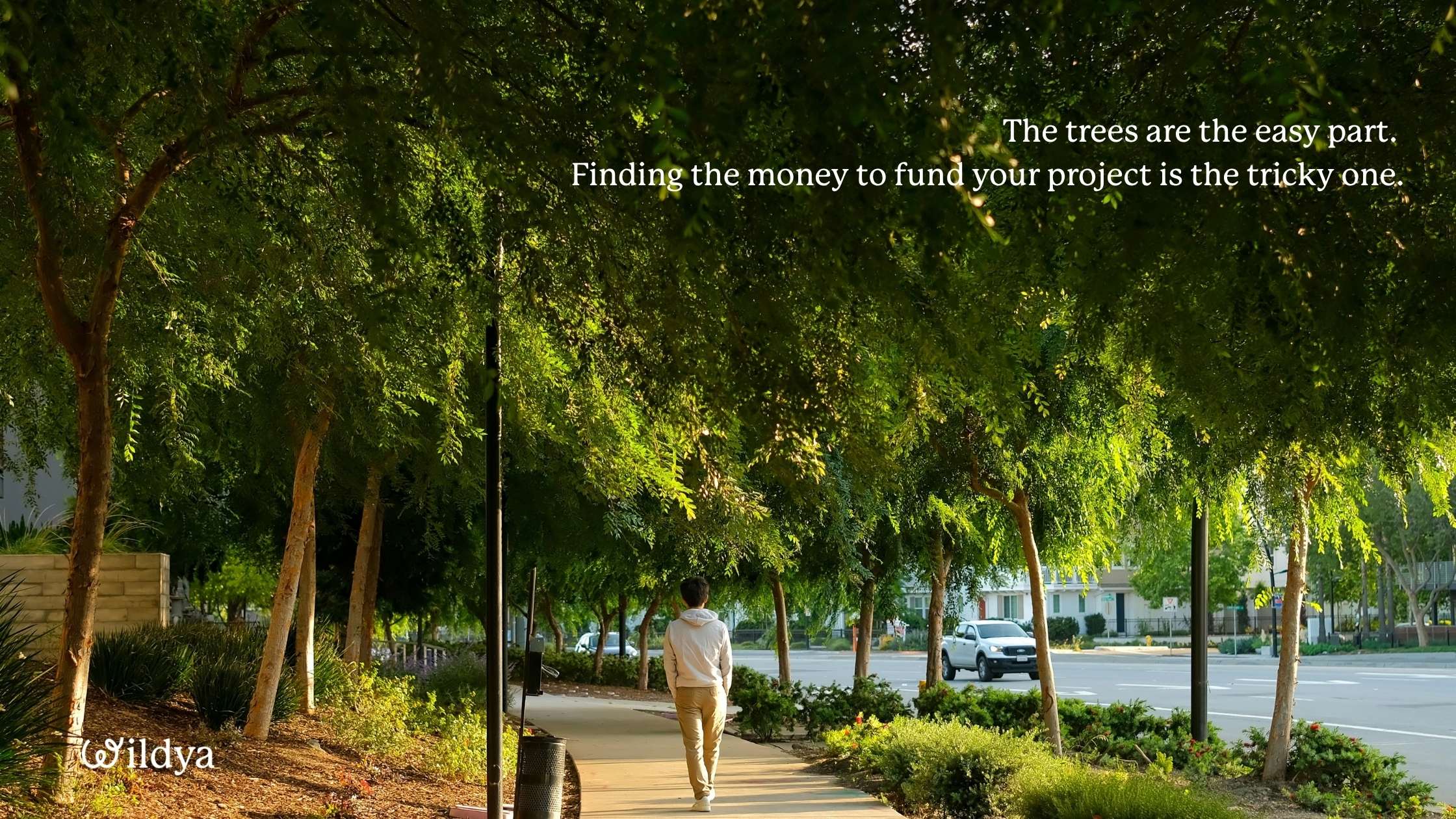
Ask how one person turned a garden idea into 265 forests worldwide with five people on the payroll, and you land on the least romantic part of the story.
The money was the hard bit, and it still is.
What SUGi teaches you about funding a nature venture
When Oliver Dauert, founder of Wildya, asked how she pays for it all, Elise did not pretend she had it solved. “I think I’m still trying to figure that out,” she said, and even asked herself later on, “How do you make it self-sustaining? The million dollar question.”
Money reaches SUGi in two ways.
Sometimes a local forest maker comes to her with a site and a plan, and SUGi’s job is to find a company willing to pay for it. Other times a brand comes to SUGi first, saying it wants to fund forests, and Elise designs a set of projects that fit what the brand is after.
Both routes run on partnerships rather than grants, and that’s on purpose. Living on grants alone is a monoculture, one bad season and the whole crop fails. 🌾
Grants are great, but try not to rely on them alone. Mix in other funding sources and your nature venture will stand on steadier ground.
She is honest about the ceiling, too. “Does that really still work with the model of selling pocket by pocket by pocket?” she asks, knowing the model has to grow into bigger commitments to truly scale.
What frustrates her most is that the money seems to exist and stay just out of reach: “You constantly hear about the millions of dollars that are ready for the nature space. But I’m really wondering, where did they go?”
The lesson for anyone building is not that funding is hopeless.
Elise grew SUGi to hundreds of forests without ever fully cracking the money, by starting anyway and building the partnerships as she went.
You will not have it worked out either. Start, and figure out different funding paths as you go.
Elise’s financial model is one route among several. If you want the full map of how nature ventures get funded, we mapped out six of them.
The skills you already have are the ones that matter
She did not go and learn a new trade to build SUGi and raise money, she reached for the one she already owned from Louis Vuitton: talking to big brands, understanding how they think, and making a partnership feel like something they are proud to be seen in.
“It’s the language I knew.”
She believes something freeing about starting, as well. “I do think, thank god in a way, that I didn’t think it through, because I do feel one has to be a bit naive in this situation.”
Anyone who could see every obstacle in advance would never plant the first tree. 🪴
So before you decide you need a skill you do not have, list the ones you already do. A career in sales, events, teaching, logistics or design is the toolbox you build the venture with.
Instead of trying to learn new skills, build your nature venture on the ones you already have, the ones you feel comfortable with. You’ll probably find great ideas that you wouldn’t have thought about otherwise.
What SUGi is building next
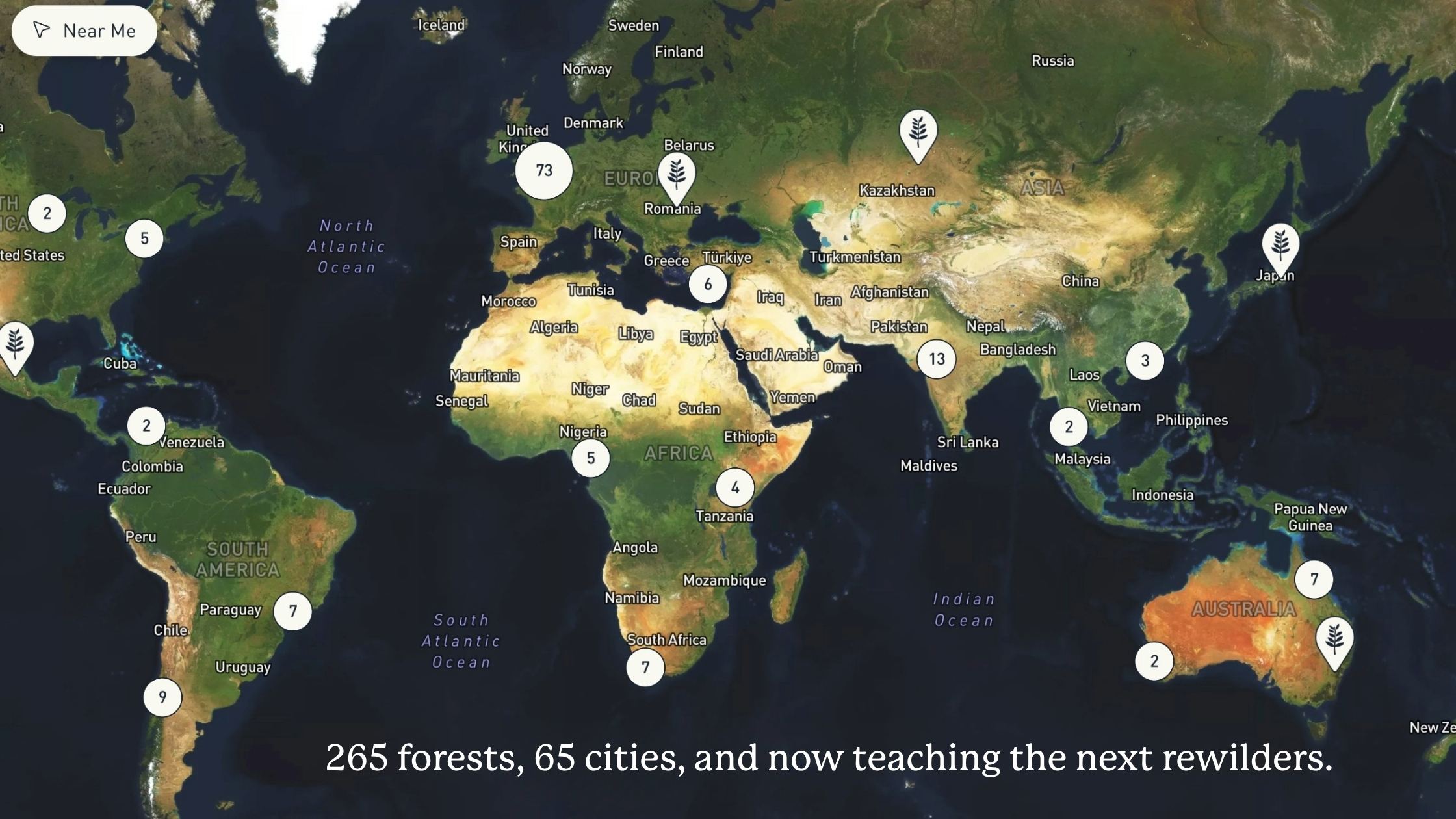
Credit: SUGi interactive pocket forests map, 2026.
Elise and SUGi are now turning a lovely brand story into hard evidence.
Her team is burying bioacoustic sensors inside the forests, with matching sensors on bare ground nearby, to record whether birds and pollinators are moving back in. 🦜
If she can show a council that a strip of trees measurably brings wildlife home and cools a street, the next forest sells itself.
Proof, again, is the currency.
She is also fighting the least glamorous battle in rewilding cities: finding land.
In London, she says, sites are harder to come by than funding, so she has put out an open call. If you know a school, a community group, or an unloved scrap of ground going spare, she wants to hear about it (connect with Elise).
The forests are becoming places people gather, too. SUGi runs a monthly walk in London where, she laughs, around 100 people fight over 20 places, with ice cream at the end. 🍦
That ice cream is a tactic you should think about, though not for the reason you might think.
People come back for the walk because it has become a small ritual where they meet others and feel part of something, and that sense of belonging is what makes them show up again and bring a friend.
Every venture has its own version of this to find: the action that pushes passive followers into active participants.
But her biggest new move is the most interesting one.
SUGi has launched an Academy, a twelve-week course that teaches people how to plan and build their own pocket forest, from finding a site and winning over landowners, councils and funders, to planting it and keeping it alive. 🎓
It’s aimed squarely at doers and career-changers who want to build something that lasts, and it ends with a real forest plan and a place in SUGi’s alumni network.
For a lot of our readers, that’s the most direct on-ramp into urban rewilding there is. You can find out more on the SUGi’s website.
Start rewilding cities before you feel ready
Elise did not wait until she had a business plan, a team and a funding model. She had a stubborn triangle she would not bend on, a set of skills from an old life, and enough naivety to begin.
Everything else, the 265 forests, the 65 cities, the councils and the brands, came from starting and adjusting as she went. 🌳
That’s the lesson of SUGi for anyone who wants to build in this space. You will not have the money solved. You will not have the perfect site.
Start with the corner you can reach, and let the rest catch up. As Elise concludes, “I hope it gives a story of hope and possibilities and joy. We need it, today, in all the doom and gloom. So I’m gonna keep doing it.”
If you’ve been waiting to feel ready before you rewild your own patch of the world, take that as your permission to stop waiting.
Rewilding cities begins with one person planting the first thing. The birds will find it. 🦅
What you should do next
- The story you tell about your work decides who falls in love with it. Elise treats every forest as a story worth telling, and that is a big reason brands line up to fund her. If storytelling is where your nature venture goes quiet, our masterclass with Karim Iliya on telling stories that move people will help you find your voice.
- If you also want to rewild your city as your full-time gig, but have no idea how to turn that into a real nature venture, the Ecopreneur Beginner Bootcamp takes you from wild idea to first paying supporters in eight weeks, the messy early stretch Elise had to work out on her own.
- If your venture is already alive but keeps hitting the same wall Elise names, where the mission is clear but the money or the partnerships struggle to scale, our Fractional Executive Team works alongside you to find the real blocker and shift it, so you spend your time planting instead of chasing.