
The power of storytelling in conservation: 3 things to take away
- The importance of telling stories for conservation is simple: great science without a story behind it reaches nobody.
- Ambassador species like humpback whales are the hook. Fall in love with one animal, and the door to everything else opens.
- Conservation workers don’t need to become filmmakers. Working with a local storyteller is enough to start.
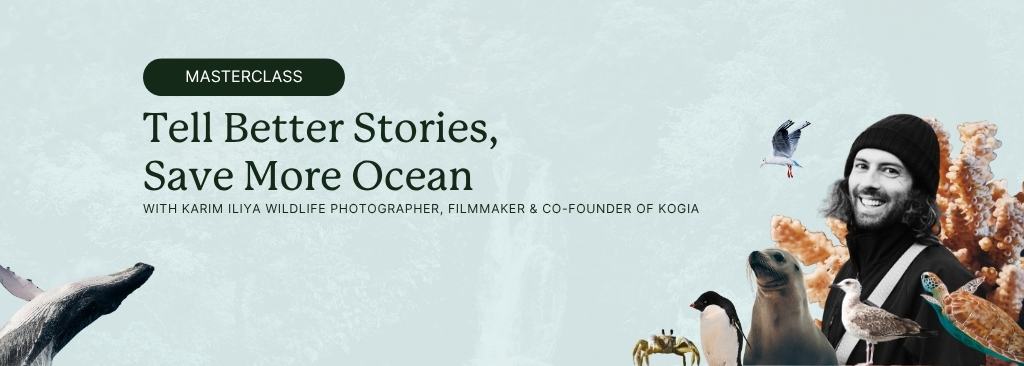
This article is based on a live Wildya masterclass with Karim Iliya, co-founder of Kogia, a free ocean media library used in over 65 countries by scientists, activists, educators and conservation organisations.
If you want more insights on the power of storytelling and what it takes to build in the nature space, The Impact Millionaire newsletter lands in 4,000+ inboxes every week.
From a camera at 13 to a free ocean media library
Karim Iliya started taking photos at 13. Not because he had a conservation plan. He got hold of a camera and started documenting the world around him. “In the beginning, it was actually just aesthetics for me. It was about creating memories and being outdoors.“
As he photographed more, the environmental issues became harder to ignore. He kept coming back to something that stuck with him: the way “a human inconvenience is worth more than a whole species of animals’ lives.“
That pulled him toward conservation photography, and eventually underwater: turtles, then whales, then long stretches of time in the ocean showing a world that most people access only through a snorkel mask on holiday, if at all. 🐋
Scientists and nonprofits began reaching out asking to use his footage. Every time, Karim was somewhere in the field without access to his files. He would say yes, arrive home, and find other work waiting. The footage never got sent.
So he and his cousin Nassim, also a filmmaker, built Kogia to fix that properly.
A free library of ocean media, pre-edited and ready to use for “conservation, for scientists, for activists, for artists, for educators,” anyone doing the work without a budget to license professional footage.
Kogia then expanded into fellowship programmes: cameras and storytelling training for young people around the world, paired with local conservation organisations and scientists so they can document their own ecosystems in their own language and style.
As Karim puts it, the fellowship “has really really made an impact we can see directly in people’s lives.“
The name Kogia? A genus of pygmy sperm whale. Almost never seen. Capable of producing ink to escape, like an octopus. As far as anyone knows, only one photographer has ever swum with one. 🐳
For Karim, Kogia “represents all of the animals that are there that don’t have the attention, but that might be lost before we even learn about them.“
The importance of telling stories for conservation
The conservation world is full of people doing hard, important work. Without a story behind it, a lot of that work stays invisible.
Karim is clear that storytelling does not replace what happens on the ground. “Storytelling alone is not enough. If you just tell stories about nothing… it’s actually meaningless then.“
The work has to be real: the species being protected, the habitat being restored, the nets being pulled from the water. None of that goes away.
But once the work exists, showing it to people who will never see it in person is what makes it travel. “The work that people are doing on the ground is super important. But I think amplifying that work, showcasing it so that people can see it and fall in love with it and realise the importance of it,” that is where stories change things.
And it’s something we, humans, have used for centuries already. “Storytelling is one of the oldest things that makes us human. People have been sitting under the moon, you know, around the fire, probably before they even figured out fire, telling stories.“
What has changed is the medium and the reach. Around a fire, a story reached a handful of people. One photograph today crosses the planet in seconds. 📸
But the mechanism is the same: put someone inside an experience they could not access on their own, and it shifts how they see things.
Sylvia Earle, the marine biologist who has logged more time underwater than almost any scientist alive, has built her entire career on this connection. She shows people the deep ocean not because they will ever dive there themselves, but because seeing it (even through a screen) is what makes them care about protecting it. 🌊
The premise is ancient: people do not protect what they cannot see. Stories, in whatever medium, are what make the invisible visible.
The power of storytelling in practice: how to use it
There is a difference between understanding why stories matter and knowing what to actually do with that. Karim covered the practical side.
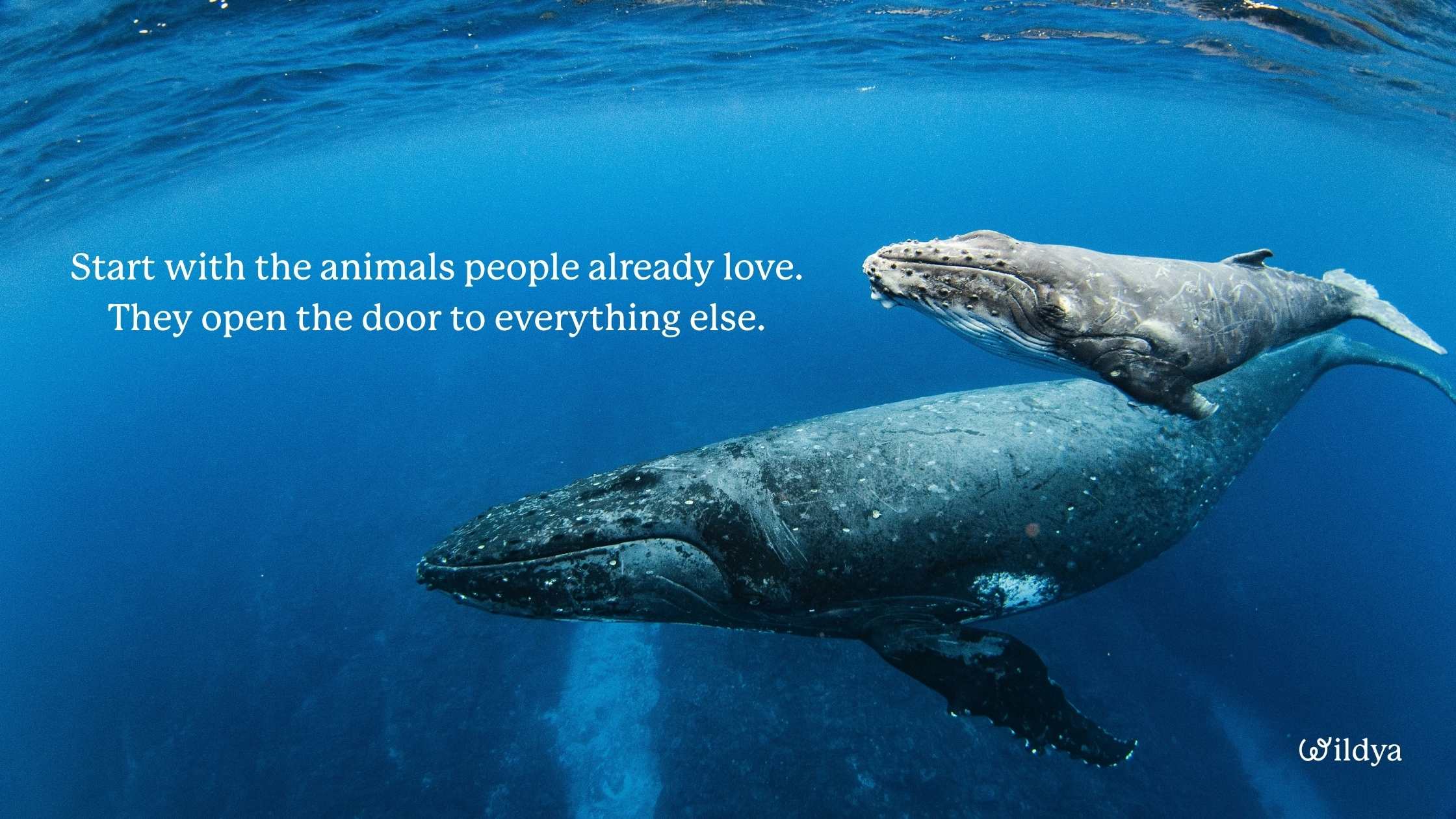
Start with the animals people already love
Some animals carry more weight than others when it comes to stopping someone mid-scroll and pulling them in.
Karim calls them ambassador species: animals striking enough to capture attention and open people up to the rest of the natural world.
The humpback whale is the clearest example. “I found that showing people images of humpback whales gets them hooked on that world, and then it opens up everything else.” 🐋
He also takes people into the ocean to swim alongside humpbacks. Coming face to face with one (seeing the animal up close) creates a feeling he compares to looking up at the Milky Way on a clear night: a sudden realisation that the world does not revolve around you, that there is something vast and sentient and alive out there.
He has seen people cry. He has seen people shift careers into conservation work. For others the change is smaller: different purchasing habits, supporting companies with better environmental standards. All of it from one animal, one moment.
Children feel this naturally. Any parent knows what happens when a toddler spots a ladybird. 🐞
That sense of curiosity gets pressed flat as people grow up, replaced by mortgages and meetings and all the things adults are supposed to care about instead. “If we can capture that childlike wonder and bring that back and get people to realise and love the natural world again, then I think that’s the goal, and that’s the starting point.“
Find the ambassador species for your project. Give it the attention it deserves. The door to everything else opens from there.
The importance of telling stories about ordinary animals
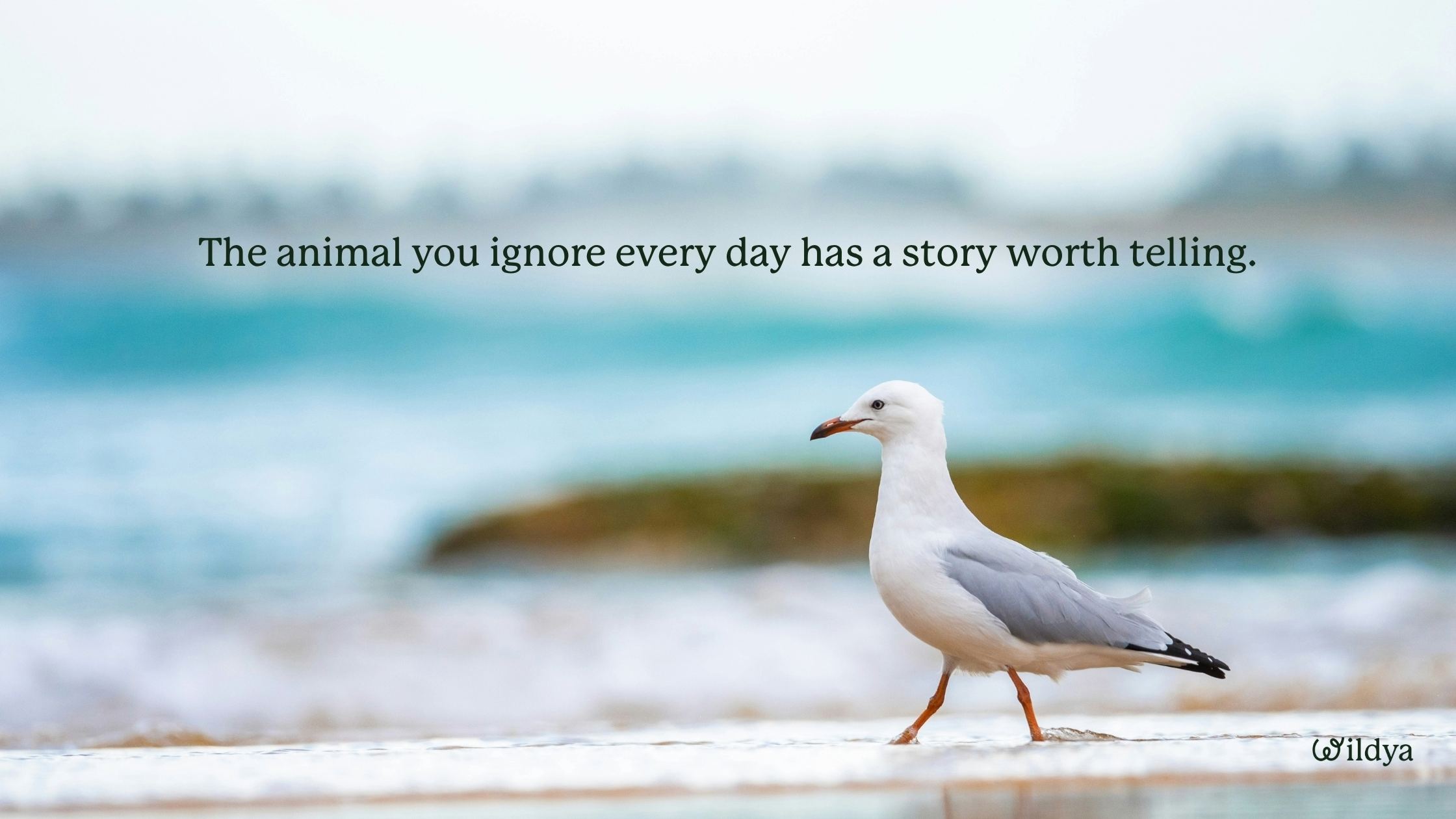
Karim spends just as much time on everyday creatures as on rare or spectacular ones. Seagulls. Ants. A lizard hunting a moth. 🦎
His reasoning is practical. Focusing on common species means having real access to them, and “you can actually get much more interesting photos and videos than you can of that rare species you only see every once in a while.“
The importance of telling stories about ordinary animals is that it meets people where they live.
Someone in Stuttgart is not going to the Tongan Islands to see humpbacks. But they walk past pigeons every day. Show them something they’ve never noticed (the iridescent purple and green in a pigeon’s feathers, the way a male puffs and turns in courtship) and you’ve just changed their relationship with their own city. 🐦
The wildlife documentary about the rare snow leopard is spectacular. The short video of the bumblebee in your garden is the one that might actually move someone to stop using pesticides. 🐝
Find a storyteller ready to help out
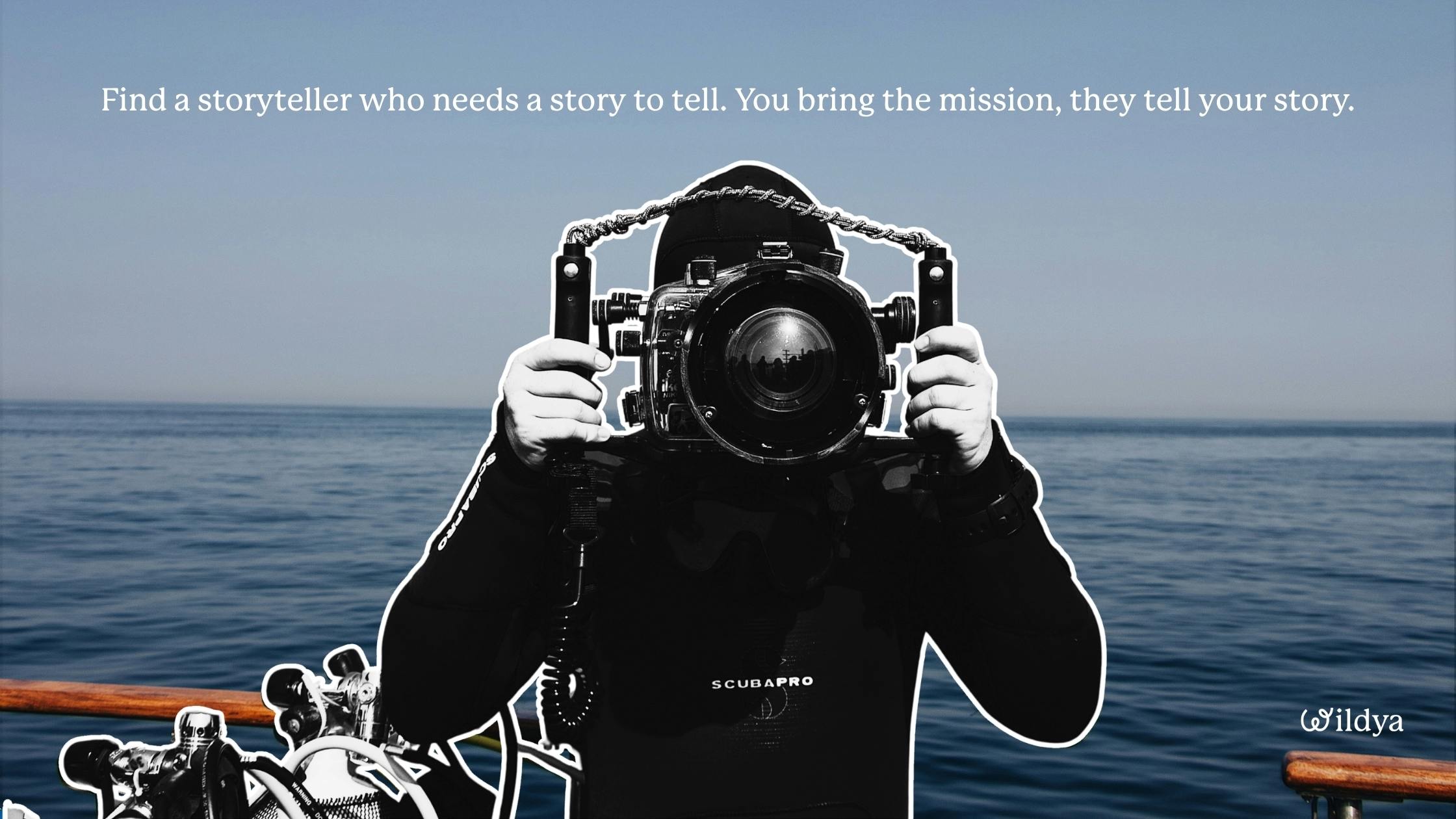
Not every ocean organisation (or any conservation projets) needs to hire a filmmaker. Most cannot afford to.
Karim’s advice is to look for young, emerging storytellers who are not yet established, people with the camera, the skills and the hunger, but without the story with real stakes to tell.
“Partner up with a filmmaker or a photographer or a storyteller… there are many young storytellers who are also looking for opportunities and stories to tell.” The organisation brings the mission. The storyteller brings the eye. Neither has what the other does.
Kogia’s fellowship programme formalises this relationship, pairing fellows with local conservation organisations and scientists. But the match does not require a formal programme to work.
If you are an NGO reading this, that person probably already exists in your city. They are just not in your inbox yet.
The power of storytelling on social media
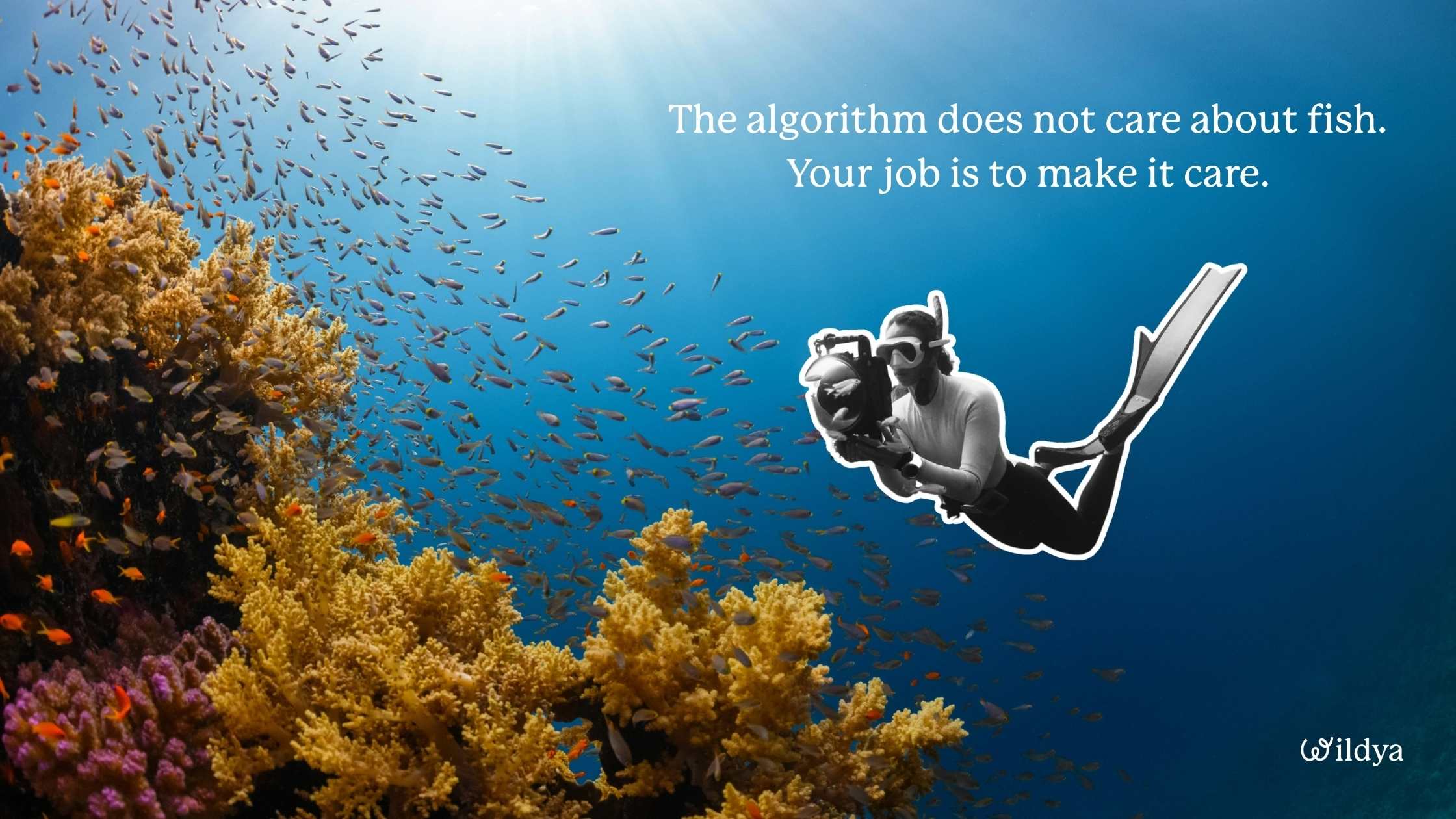
Once you know what to show, you still need to reach people who are not already inside the conservation bubble. Which means going onto the platforms where attention lives, with all the pressure that brings.
Platforms like Instagram or LinkedIn can put your work in front of millions of people who would otherwise never see it. The algorithm, though, does not care about mantis shrimps. It cares about what stops the scroll. 🦐
Karim knows exactly which content performs on Instagram. A humpback whale underwater reliably racks up views. The egret at sunset that took days of shooting to capture? Much harder to predict.
He navigates this by mixing deliberately. “When I need to increase the following count, I’ll put some videos of whales and volcanoes, and then I will slip in some photos of a lizard or… an insect.“
The big animal builds the audience. The small one is where the real work lives.
There is a second issue: format.
A lot of conservation content is built like a scientific report that someone decided to film or write. “We have this habit of being quite rigid and structured about how a story must be told, and it’s quite dry.“
To reach people (and potential customers) who do not already follow conservation accounts, the stories need to be genuinely easy to enter.
A human face helps: a scientist in the field, a local person with real stakes, a character the viewer can follow. People follow people before they follow causes.
A person pulling fishing line from a seabird’s leg is more arresting than a statistic about seabird mortality, even if the statistic is worse. 🪶
The power of storytelling on social media is the difference between someone scrolling past a coral reef photo and someone pausing, searching for the organisation behind it, and signing up to their newsletter at 11pm on a Tuesday. 🪸
Getting the practical side of storytelling clear is one thing. Putting your own brand’s story into words that actually connect with people outside your field is a different kind of challenge. We went into that question in depth.
How you can support Karim and Kogia
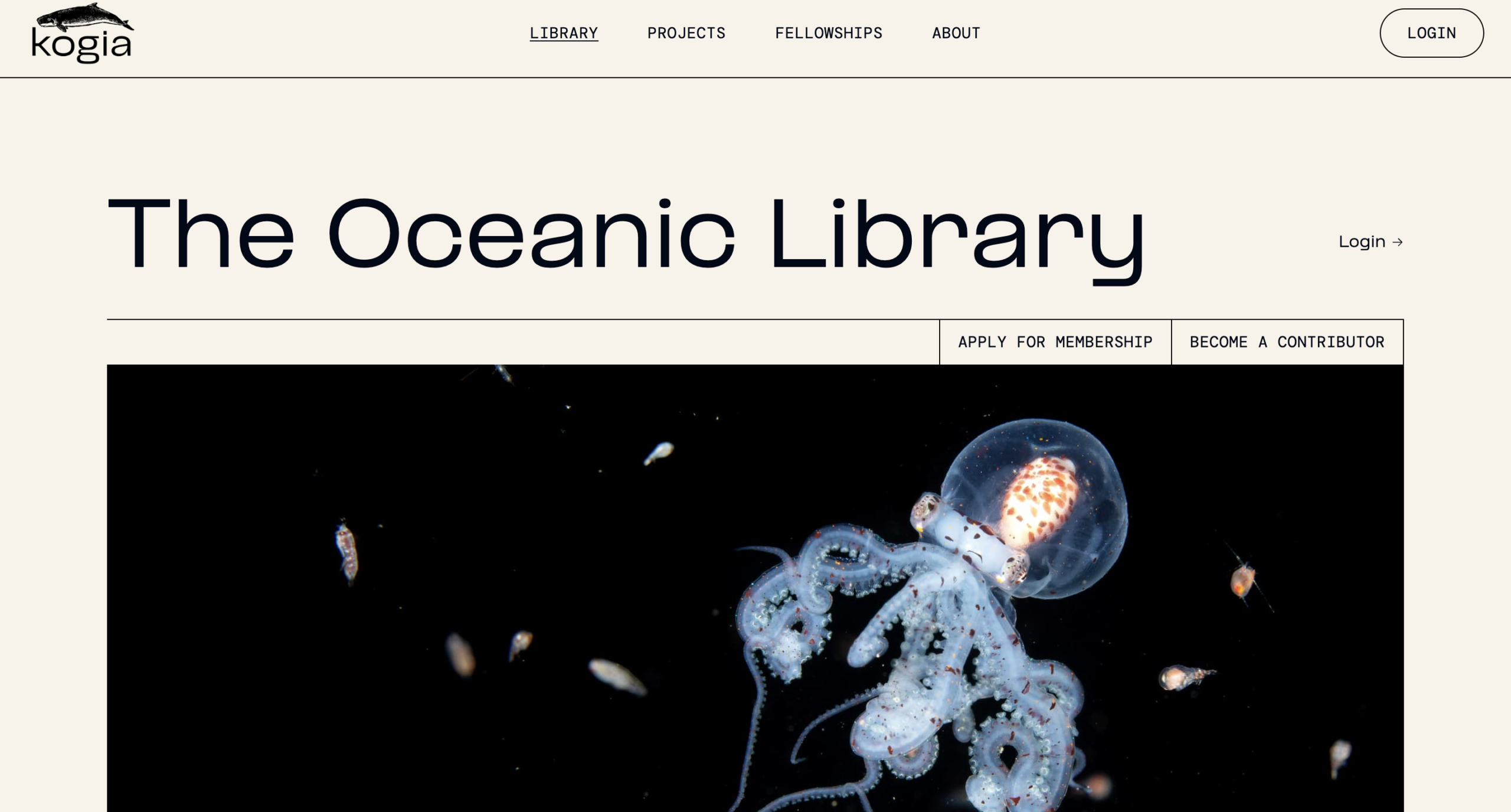
Karim and the Kogia team run on a tight budget. The more support they get, the more the library grows, the more fellows get cameras, and the more conservation stories reach people who would never have found them otherwise.
If you are a conservation organisation, scientist, educator or activist looking for free, ready-to-use ocean media, the Kogia library application takes 2 to 3 minutes. If you want to support the work financially, you can donate directly on their website.
If you are a young storyteller, photographer or filmmaker who wants to develop their craft while telling real conservation stories, the Kogia fellowship programme is worth looking into. 📷
Fellows receive camera gear, storytelling training, and get connected with local conservation organisations and scientists in their area. Fellowships are currently running or in development in Wales, Nunavut, Malaysia and the Gulf countries.
If you are an established storyteller, photographer or filmmaker and want to help Kogia grow their library, they are always looking for people to get involved. Reach out to the team at info@kogia.org or nessim@kogia.org.
To follow the work as it happens, Karim shares his photography and filmmaking on his personal website and on Instagram.
One last thing, and we know you’re going to like it: is swimming with whales one of your dreams? Or did it become one while reading this article? Well, Karim answers your wishes with Dance With Whales. 🐋
Start telling stories with what is already around you
Great conservation work that nobody sees is like a species nobody knows about: already halfway to gone.
The importance of telling stories for conservation is not about follower counts or viral moments. Stories are what turn invisible work into something people can fall in love with, care about and join.
The power of storytelling has always been there, sitting around fires long before language was written down.
Karim built a free library and a fellowship programme to put it in the hands of people who have the science and the mission but not the camera or the media team.
Remove every barrier you can, hand people the tools, let them tell their own stories. The rest grows from there.
This article is based on a live Wildya masterclass with Karim Iliya, co-founder of Kogia. If the storytelling side of your nature venture keeps falling to the bottom of the list (not because it doesn’t matter, but because there is always something more urgent) our Fractional Executive team is here to help you out.