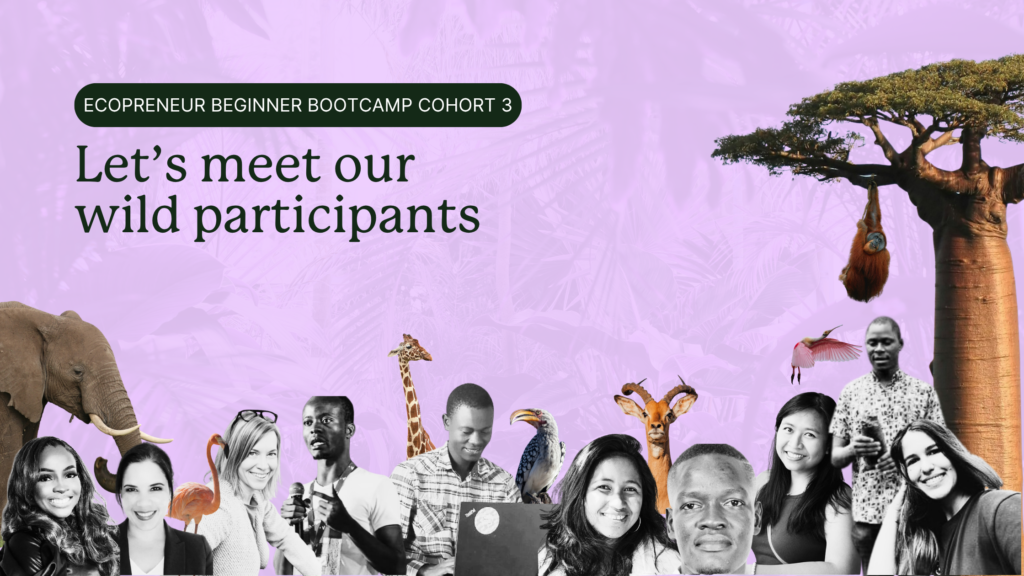

Three things to know about this Ecopreneur Beginner Bootcamp cohort
- Cohort 3 brings together 10 participants from 8 countries, each building in the ecosystem they know best, from Nairobi’s flood-prone neighbourhoods to Kalimantan’s threatened forests.
- Some participants have 10 years of fieldwork behind them. Others are starting completely from scratch. Both belong here.
- By week 8 of the Ecopreneur Beginner Bootcamp, every one of them will have validated their idea, built their offer, and started their nature venture.
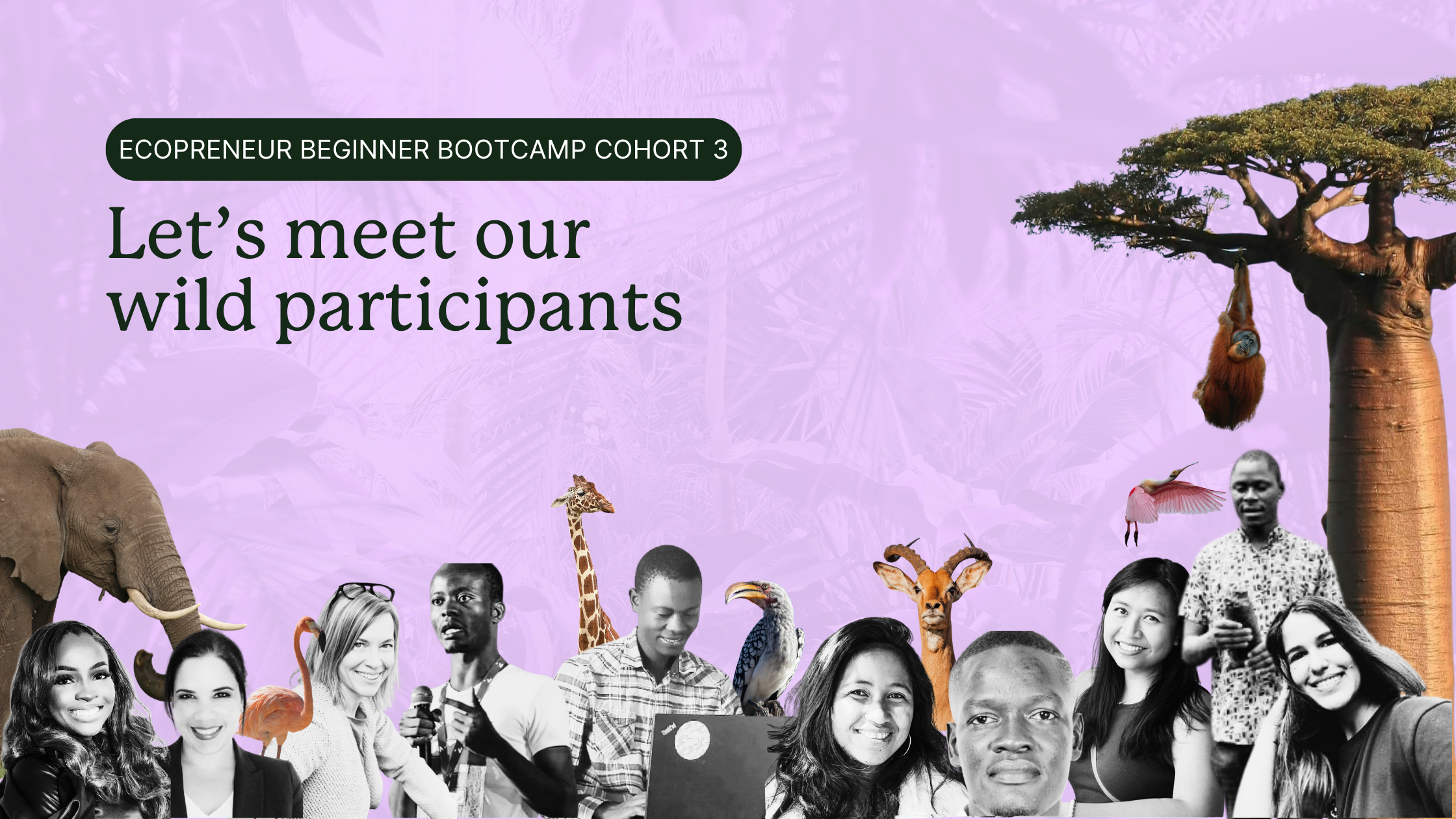
Cohort 3 of the Ecopreneur Beginner Bootcamp just started. A small group of people decided to stop waiting to be part of the solution and start building for nature. 🦎
They arrive with a rough idea, a lot of determination, and often years of watching the problem they want to solve get worse around them.
10 participants from 8 countries: Kenya, Indonesia, Madagascar, Malawi, Argentina, Nigeria, Colombia, and the Netherlands.
Different ecosystems, different crises, different approaches. But the same underlying belief: that nature deserves better, and that the people closest to the problem are often the ones best placed to fix it.
Let’s introduce each of them and the wild idea they are starting with. 🐾
Some will pivot, some will take root, but we cannot wait to see what 8 weeks does to each of these projects.
If you want to follow their journey and get tips on building your own nature venture, join The Impact Millionaire, our free weekly newsletter.
What is the Ecopreneur Beginner Bootcamp?
Most people who want to do something for nature get stuck long before they build anything real. The idea lives in their head for months. Sometimes years. The problem is clear. The passion is there.
But the path from “I want to do this” to “someone just paid me for this” stays blurry.
The Ecopreneur Beginner Bootcamp was built for that specific gap. It runs for 8 weeks, and every single week is built around one purpose: building your nature venture from the ground up, step by step, with foundations designed to actually last. 🌳
In those 8 weeks, you figure out whether your idea is worth pursuing and why. You map out who it is for and how your business model works. You shape your offer, get it in front of the right people, and learn to have the conversations that lead to a yes.
By the end, you have gone from rough idea to first paying supporter.
And you have done it alongside up to 15 other ecopreneurs at the same stage, pushing each other forward.
The 10 people you are about to meet just started doing exactly that.
But the bootcamp is not for everyone. It’s for people who are ready to do the work. Want to know if it is right for you?
10 participants, 10 wild ideas: let’s meet them
From one side of the planet to the other, from anti-poaching sensors to rattan agroforestry to intuitive animal communication, these 10 people are building where nature needs the most help.
We are introducing them here because the right partner, collaborator, funder, or future bootcamp participant might be reading this right now.
These are their ideas at day one, and over the next 8 weeks, some will change.
Olusegun Uhuru | 🇰🇪 Samburu, Kenya
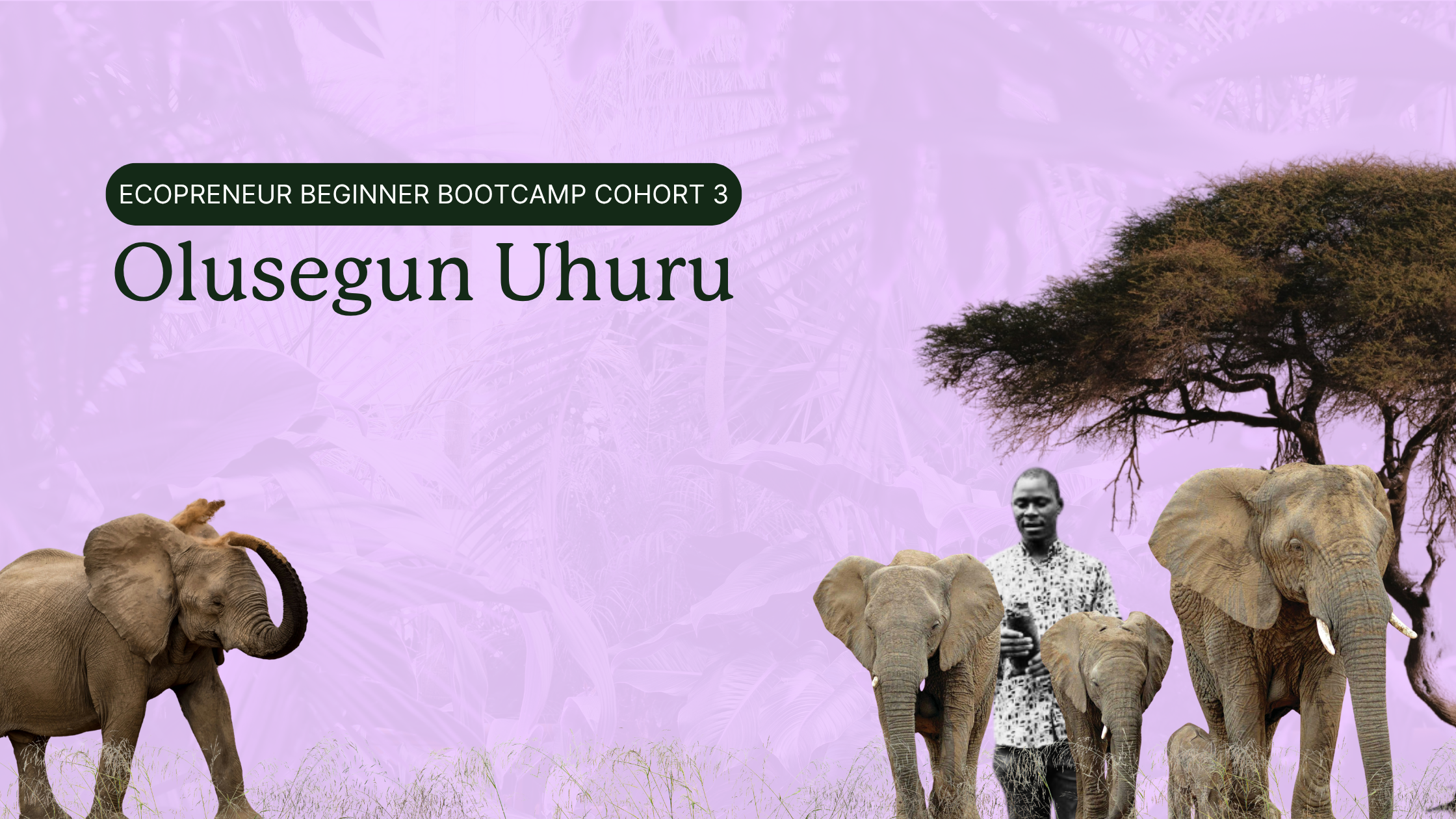
Olusegun grew up in a pastoralist community in Kenya, herding cattle and watching human-elephant conflict play out around him from childhood. 🐘
He holds a B.Sc. in Environmental Education and comes to the bootcamp with something rare: a project rooted in lived experience, not just research.
His idea is a community-led Coexistence Story Network in Samburu.
Local people affected by human-elephant conflict are trained to document wildlife encounters through photography and storytelling, earn income from what they create, and shift the relationship between their community and the elephants from fear and retaliation to something that can actually coexist.
The project targets pastoralist communities in Naibor Keju Village and the surrounding area, where crop damage, water conflicts, and safety risks are daily realities.
If conservation storytelling, community-based approaches to human-wildlife coexistence, or early-stage nature ventures in East Africa are in your orbit, connect with Olusegun.
Whether you are a potential collaborator, someone looking to support his work, or an aspiring nature entrepreneur who wants to see what starting from lived experience looks like, his journey is worth following.
Leakey Ochieng | 🇰🇪 Nairobi, Kenya
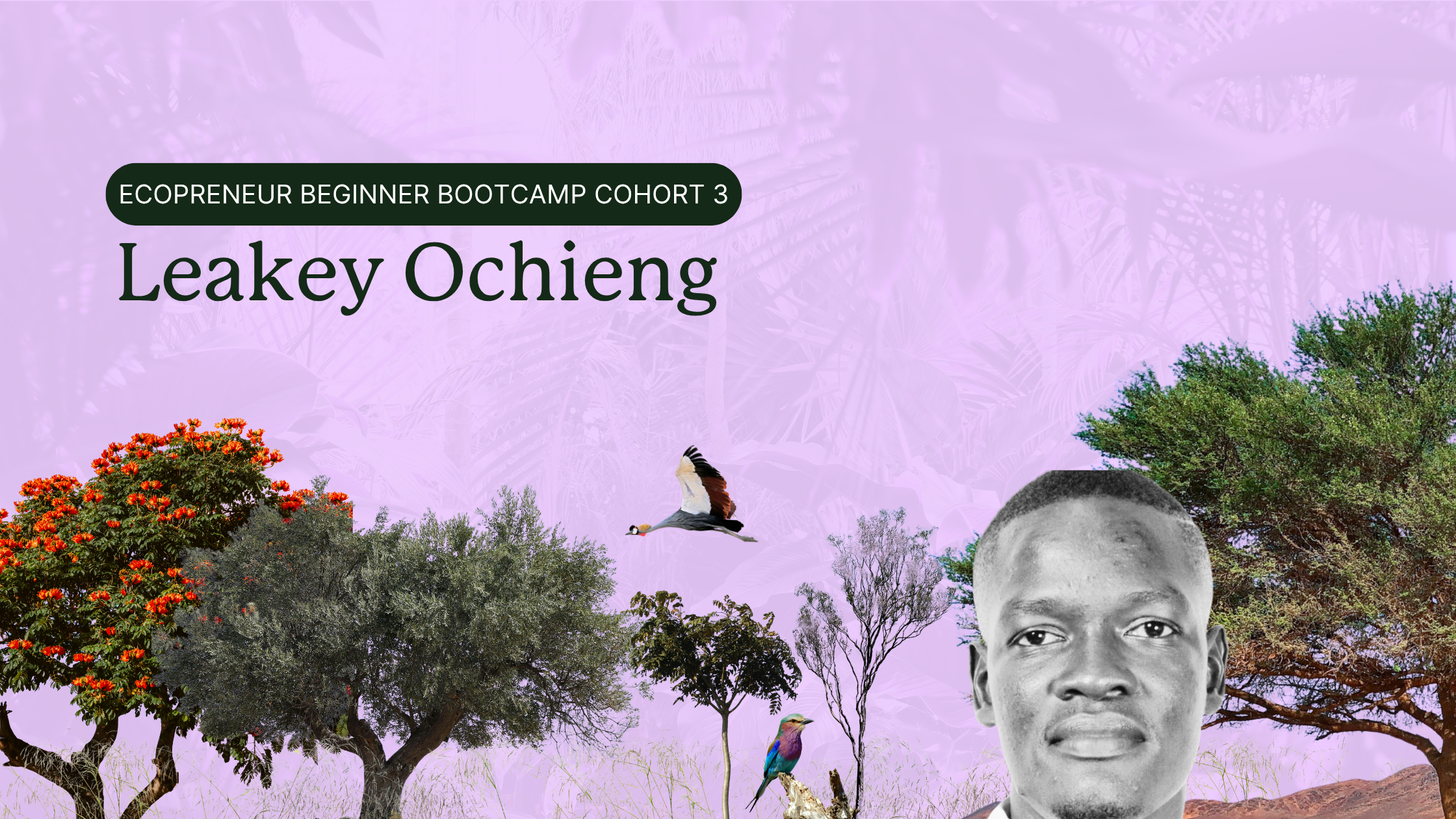
Leakey works at the moment as a Tissue Culture Laboratory Analyst at Winfield Africa and is currently completing his MSc in Environmental Management at the Open University.
He came into the bootcamp with a question that a lot of urban Africans are starting to ask: what if cities could work with nature instead of against it?
His project, the Urban Forest Sponge Network, turns Nairobi’s neglected and degraded urban spaces into living infrastructure. 🌳
These interconnected networks of native trees are designed to absorb excess rainwater like a sponge, preventing flooding, cooling local temperatures, and creating corridors of biodiversity in one of Africa’s fastest-growing capitals.
His biggest challenge, and one he is clear-eyed about, is getting a city with limited environmental awareness to see the value of what he is building.
If urban forestry, nature-based climate adaptation, or early-stage environmental projects in Nairobi are your world, Leakey’s journey is worth following.
Whether you want to collaborate, fund, or simply follow a nature entrepreneur tackling one of the most underrated urban conservation challenges in Africa, connect with him.
Icha Irdhanie | 🇮🇩 Kalimantan, Indonesia
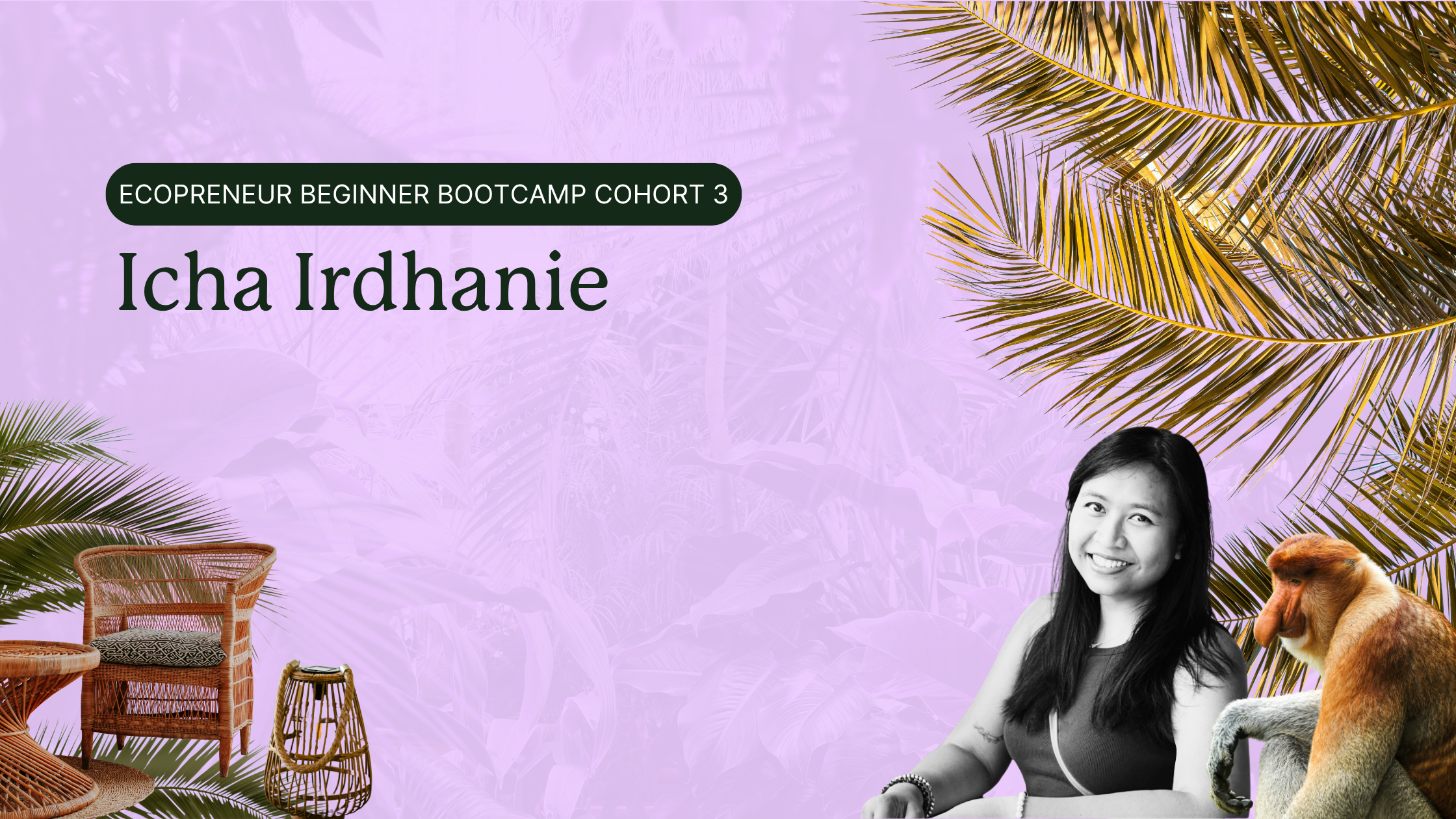
Icha is a psychology graduate from Indonesia who describes her mission bluntly: protecting her country from killing its own forests through extractive industry and oligarch-driven palm oil expansion. 🌴
She brings an unusual background to an agroforestry project, but she sees the human side of the problem in ways that forestry experts often miss.
Her project creates an end-to-end rattan agroforestry system that connects farmers at grassroots level with capacity building, with a rattan processing infrastructure, and with buyers. 🪑
It is built on fair trade principles and community ownership, with a focus on making rattan a genuinely sought-after commodity again.
Part of what drives her is a hard fact: rattan prices have not changed in 20 years, leaving farmers trapped while extractive industries offer an easier alternative. But rattan can only grow in a living forest. A farmer who earns from it has every reason to keep the trees standing.
If agroforestry, forest protection, or sustainable commodity chains in Southeast Asia are your field, Icha’s project sits right at the intersection.
Whether you are a potential partner, someone who wants to support fair trade forestry in Indonesia, or an aspiring nature entrepreneur looking for a model of how passion and an unconventional background can drive a forestry project, connect with Icha.
Hoby Nambinintsoa | 🇲🇬 Antananarivo, Madagascar
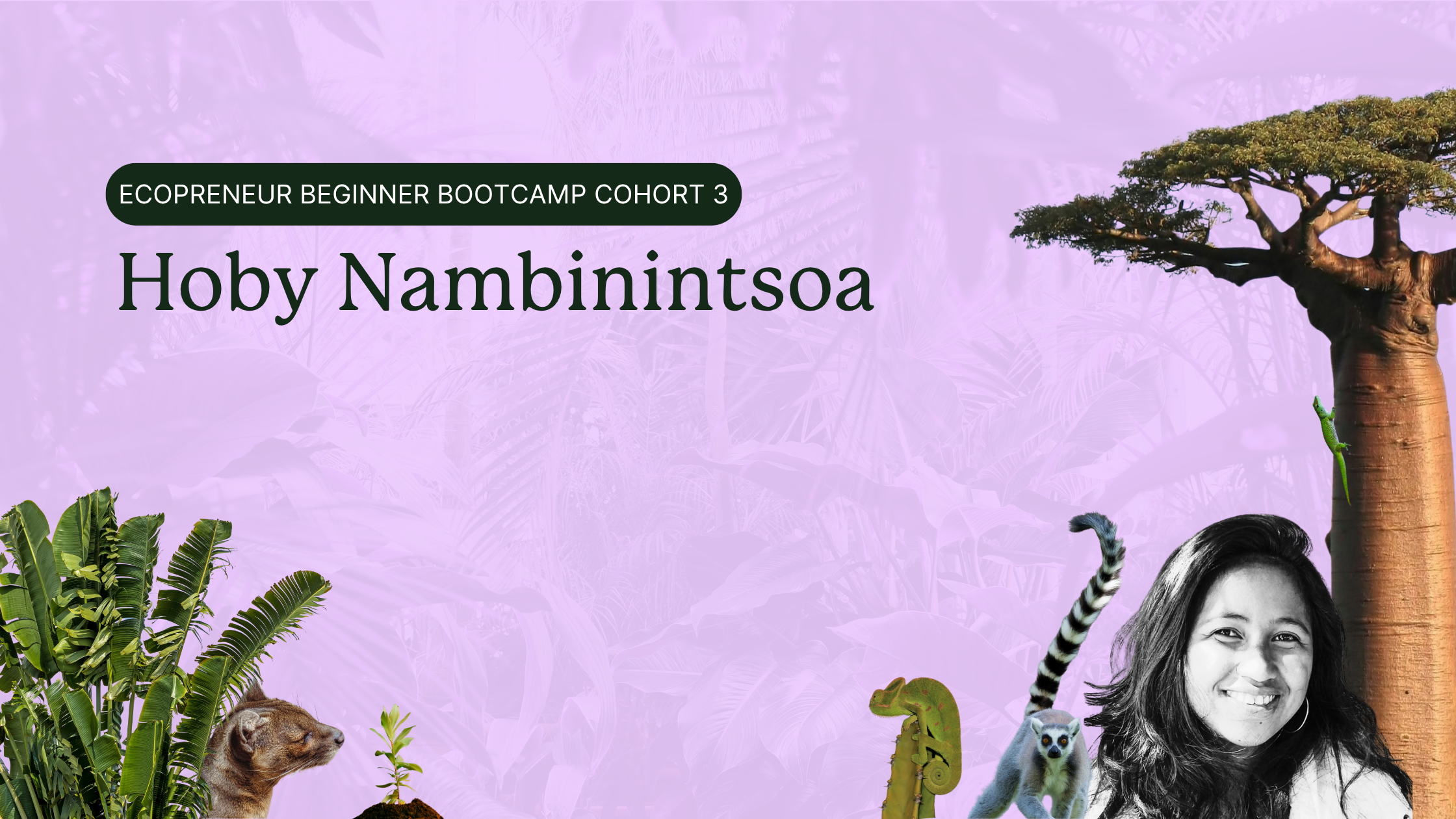
Hoby has spent a decade doing fieldwork in one of the planet’s most unique and most threatened ecosystems: Madagascar. 🇲🇬
She holds a master’s in plant biology and ecology from the University of Antananarivo and spent three years on urban planning research before deciding it was time to build something of her own.
Her project starts in the capital. Antananarivo is a polluted city where native trees have been replaced by exotic species, and what is left is not enough to cool the urban heat.
Hoby wants to re-green it, planting native trees inside the city in schools, along roads, and in community gardens, while restoring native forest in the area surrounding the city.
The goal is not just biodiversity. It is a biocultural heritage: the connection between people and the native species they grew up with, passed on to the next generation before it disappears entirely.
If urban ecology, native species restoration, or biodiversity work in Madagascar are your area, or if you want to support a nature founder bringing real scientific depth to a real urban problem, Hoby is someone to connect with.
And if you are considering your own nature venture, watching someone with 10 years of fieldwork learn the business side is its own kind of education.
Anthony Ndiritu | 🇰🇪 Kenya
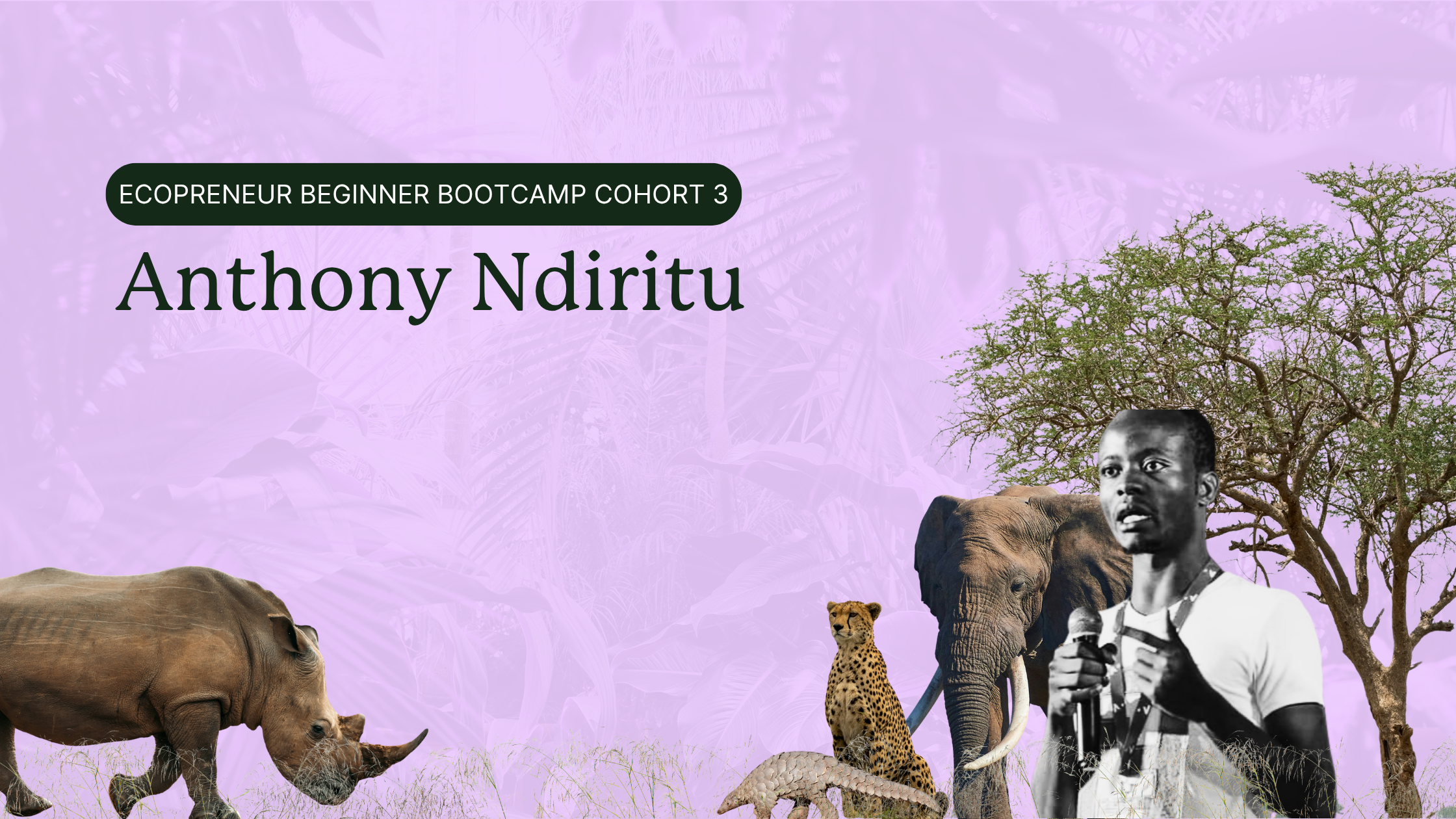
Anthony has the concept and the drive. What he is here to build is the business model and the network to make it real.
His project is a low-cost, solar-powered IoT early warning system that uses thermal, motion, and acoustic sensors to detect poaching and illegal forest activity in real time. When a sensor triggers, rangers get an instant alert. 📸
The system integrates community reporting alongside the technology, so local people become part of the solution rather than bystanders to it.
The angle that sets his project apart is accessibility. Conservation technology exists, but it is expensive, fragile, and built for well-funded organisations. Anthony is designing for underfunded regions, where the biodiversity is most at risk and the resources are most limited. 🦏
His goal is to make anti-poaching infrastructure something any ranger station can afford and maintain.
If conservation technology, anti-poaching systems, or accessible tech solutions for underfunded wildlife protection are where you work, Anthony is building something directly relevant.
Whether you are a potential funder, a technical collaborator, or someone curious about what affordable conservation infrastructure can look like, connect with him.
Citros Chipetah | 🇲🇼 Lilongwe, Malawi
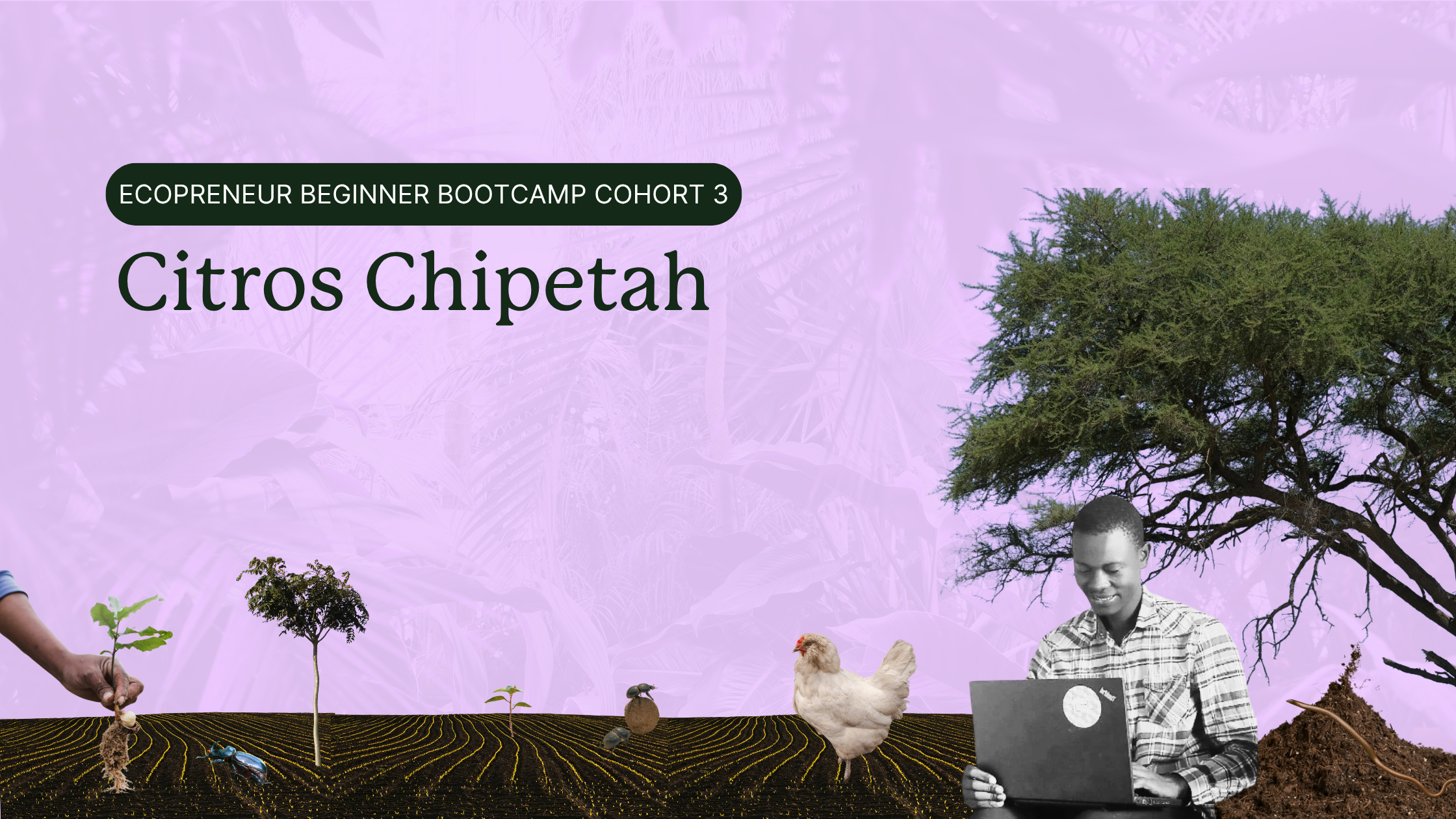
Citros comes to the bootcamp with deep technical knowledge and a clear focus: building a farming system that regenerates rather than depletes. 🌾
He has been testing his biochar-enhanced composting approach and knows the science works.
What he needs is the business structure to take it to the smallholder farmers who need it most. 👩🌾
His system centres on integrating biochar into aerobic composting to create a slow-release organic fertiliser that does not just feed crops but restores the soil biology underneath them, pulling carbon from the atmosphere back into the earth.
The challenge he is navigating is a real one: how do you make high-quality regenerative inputs affordable for low-income smallholder farmers while building a financially sustainable business that can grow?
If regenerative agriculture, biochar applications, or soil restoration in sub-Saharan Africa are your focus, Citros is already working on something worth paying attention to.
Whether you are a potential partner, an impact investor interested in circular agricultural solutions, or someone who wants to follow what building a regenerative farming venture from the ground up really looks like, connect with him.
Patricia Fernández Cañas | 🇦🇷 Buenos Aires, Argentina
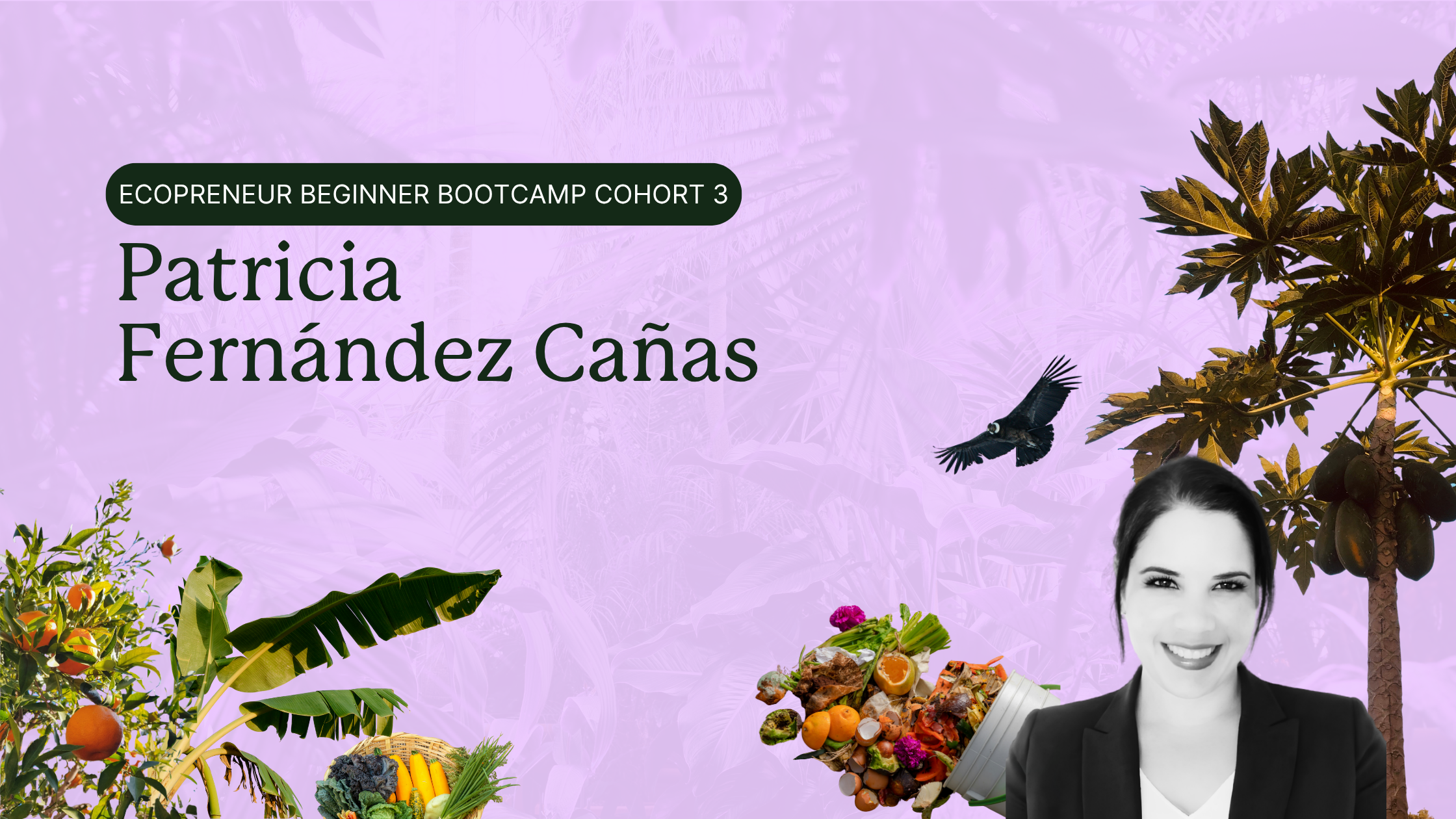
Patricia is an environmental consultant and university lecturer who has spent years at the intersection of circular economy, food systems, organic waste recovery, and public policy in Latin America.
Originally from Venezuela and based in Argentina since 2016, she came to the bootcamp with a framing that sharpens the problem in a way most people overlook: most of what we call food waste is not waste at all. It is a resource that ended up in the wrong system. 🥙
Her project is a food circular economy NGO that works with every actor along the food chain to prevent food loss, transform recovered food into new products, and turn unavoidable organic waste into energy and bio-inputs.
The vision is to reduce the environmental, social, and economic losses that happen at every step of food production, from farm to plate, while creating local jobs and improving food access for vulnerable communities. 🍑
If circular economy, food systems, or sustainable waste solutions in Latin America are your field, or if you are simply someone who believes the food system is one of the most underestimated levers for environmental change, Patricia is building at the centre of it.
Whether you want to collaborate, support her work, or follow a nature entrepreneur shaping a vision that is both environmental and deeply economic, connect with her.
Eniola Omotoye | 🇳🇬 Epe, Lagos, Nigeria
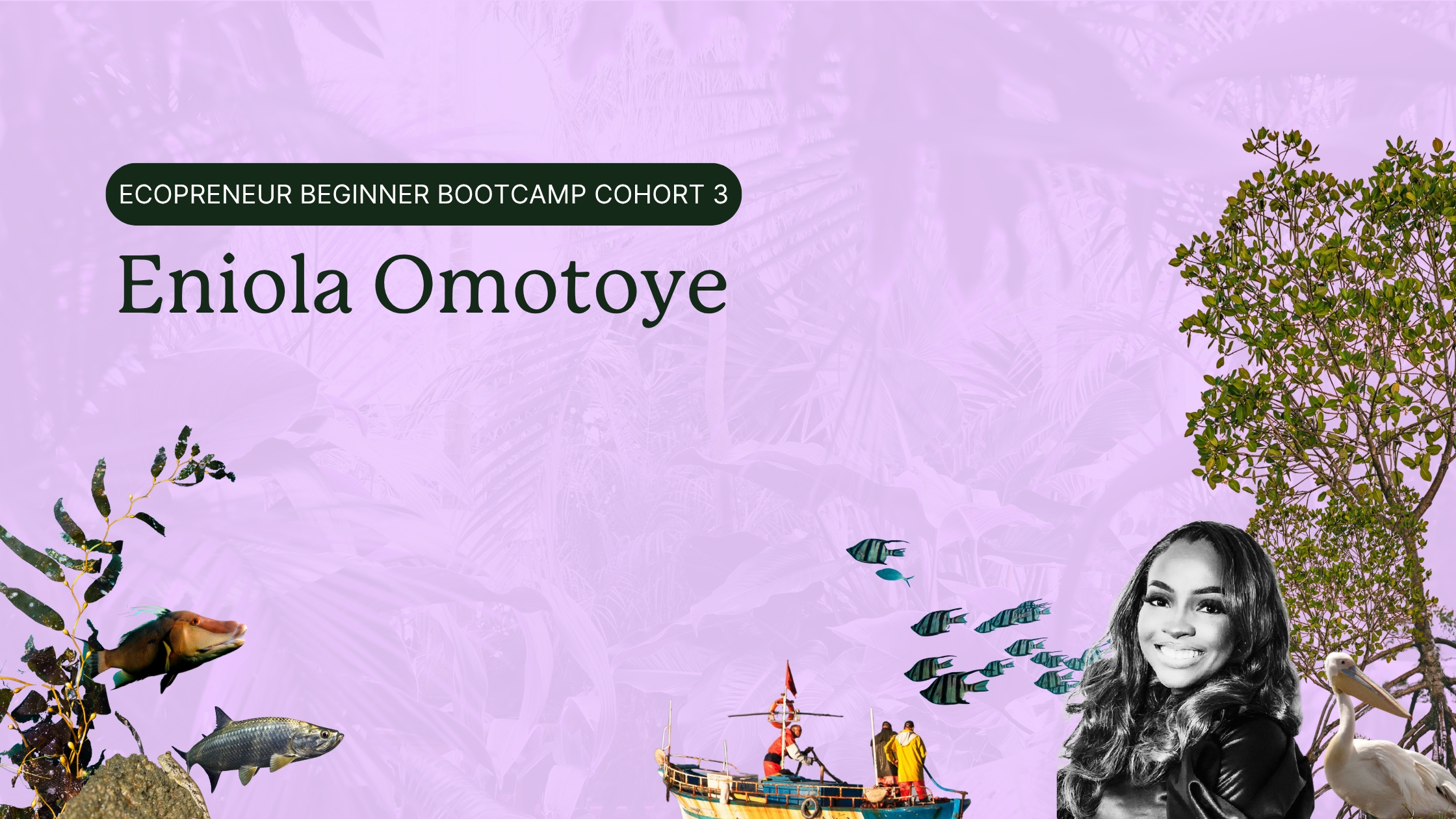
Eniola is tackling a problem that is quietly worsening on Nigeria’s coastline.
In fishing communities like Epe, fish spoilage after the catch is not just an economic loss, it is an environmental one too. Fishers who lose income to spoilage go back out and fish harder, putting more pressure on already stressed coastal lagoon ecosystems. 🐟
Her solution is a community-owned, solar-powered cold storage hub that preserves the catch, stabilises fisher incomes, reduces the pressure to overfish, and creates a climate-resilient economic opportunity specifically for women and youth in the blue economy.
It is a project that solves an environmental problem by solving an economic one first, which is often where the most durable solutions begin. 🎣
If blue economy, coastal ecosystem protection, or solar-powered solutions for vulnerable communities are your area, or if you want to see a project that solves an environmental problem by solving an economic one first, Eniola’s work is worth following.
Whether you are a potential funder, partner, or future bootcamp participant looking for inspiration, connect with her.
Daniela Congote | 🇨🇴 Medellín, Colombia
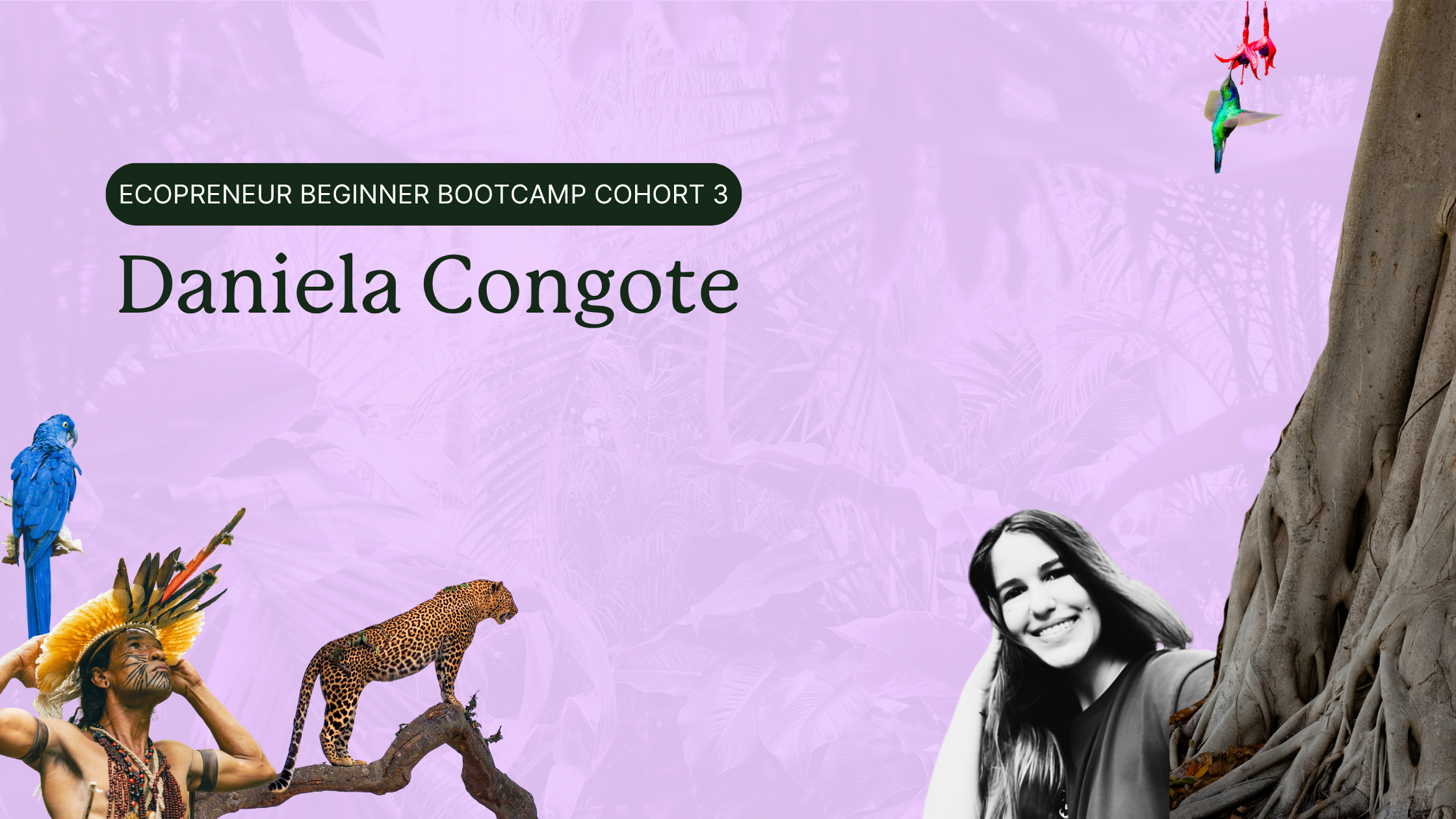
Daniela is an environmental engineer from Colombia who chose a path that most engineers do not. She has worked with Afro-Colombian communities, conducted research on socioecological sustainability for public policy, and spent three months living in the Brazilian Amazon.
That time in the Amazon changed the direction of her work entirely. 🌴
She came back convinced that the deepest conservation work happens not through projects and reports but through people reconnecting with what they are actually part of.
Her NGO brings together spirituality, ancestral knowledge from Indigenous communities in Colombia, and practical nature immersion to foster that reconnection in others.
It rescues and documents traditional practices while urban participants reconnect with themselves and the living world through experience, not just education. 🪶
She knows the challenge: most initiatives that depend entirely on grants do not last. She is here to build a self-sustaining model that does not need the next funding cycle to survive.
If Indigenous knowledge systems, spiritual ecology, or conservation models built for long-term independence from grants are your focus, Daniela is building something rare.
Whether you want to collaborate with her work in Colombia, support an unconventional approach to nature reconnection, or simply follow an ecopreneur taking the road less travelled, connect with Daniela.
Christine van Leeuwenstijn-Sponholz | 🇳🇱 Wijhe, Netherlands
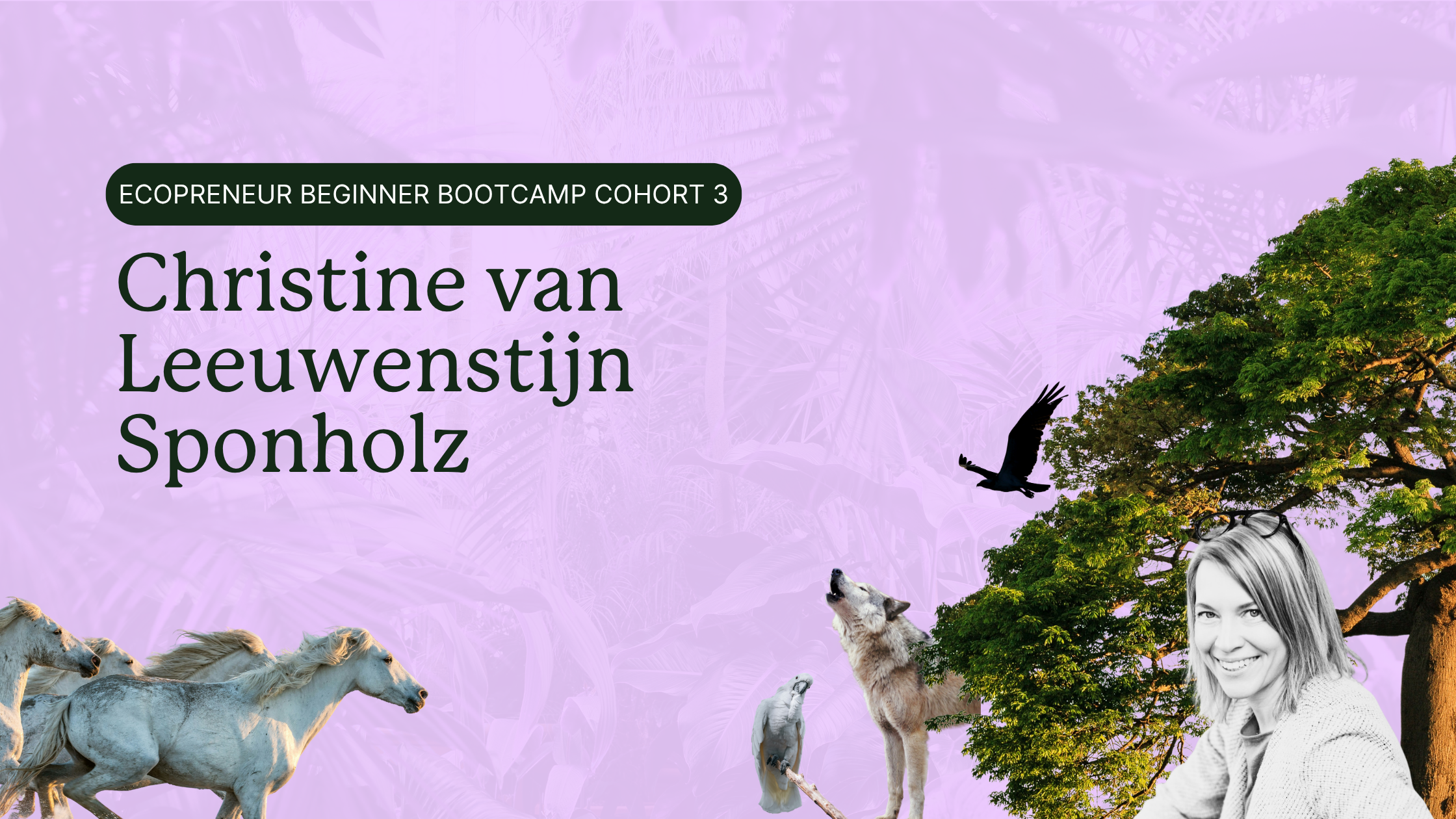
Christine has spent 20 years as a professional translator working across German, Dutch, and English. When AI began disrupting her profession, she did not look for the next version of the same work.
She asked a different question entirely: what if the most needed translation work is not between human languages, but between human beings and other species?
She is a student of intuitive animal communication and is exploring how to bring that skill into the professional world of wildlife protection and restoration. 🦧
Her idea is to offer interactive workshops for companies, organisations, and individuals working in conservation, nature governance, and initiatives like the Rights of Nature movement, helping them develop a more intuitive, felt connection with the natural world they are working to protect.
She is hoping the bootcamp helps her define her product, find her audience, and start moving.
If wildlife protection organisations, nature governance, or the Rights of Nature movement are part of your world, Christine is exploring ideas that could be directly useful to you.
Whether you want to explore her workshop concept as a potential partner or client, are simply curious about interspecies communication, or are an aspiring nature entrepreneur interested in how a completely different professional background can open new paths in conservation, Christine is worth connecting with.
In 8 weeks, these 10 participants will have built something real
These are starting points. Rough ideas with open questions, some already tested on the ground, others barely sketched out.
That is exactly where the Ecopreneur Beginner Bootcamp begins. 🐾
Over the next 8 weeks, each of these 10 participants will validate what they are building, shape their business model, and land their first paying supporter.
Some of their ideas will evolve. Some will pivot. That is not a failure. That is the process working. And it is what we are most excited to be part of.
What you read here is where they start. At the end of Cohort 3, we will publish a second article showing what each of them built.
Come back and see the difference.
What you should do next
- Among these 10 participants, 9 got this chance thanks to our scholarship program. Spots fully funded by a handful of sponsors, and over 130 people applied for them. For every person who gets in, dozens do not. Each spot costs 747€ and gives a nature founder in the Global South the structure, support, and network to turn a wild idea into something real. To fund a spot for the next Cohort, reach out to Oliver.
- If reading this made you want to do what these 10 people are doing, the next bootcamp starts September 16. You do not need a polished plan, just a wild idea and 7 hours a week to commit. Save your spot for Cohort 4 before it fills up.
- If you are based in the Global South and a paid spot is out of reach, the scholarship exists for exactly this. Every cohort, we have a limited number of fully funded spots for people ready to build something for nature. Apply for a scholarship now and tell us about your wild idea.