


How to get funding for a business when your goal is to protect nature?
Simple question. But the reality is a lot wilder.
Because in the ecopreneur world, finding money to launch or develop an idea can feel like searching for a lynx in a 12,000-hectare forest. 🐾
And that’s where impact funding steps in.
It’s the kind of financing that supports projects healing the planet, regenerating soils, protecting species, rewilding forgotten forests, or bringing life back to tired rivers.
If you’re building a nature venture (a product, service, a wild idea that could genuinely make a difference), you don’t have to choose between impact and financial survival.
There are multiple paths to move forward, and some are easier to walk than others.
We’re going to explore all those different solutions and practices. Together. One by one.
1. Grants for nature, wildlife and biodiversity projects
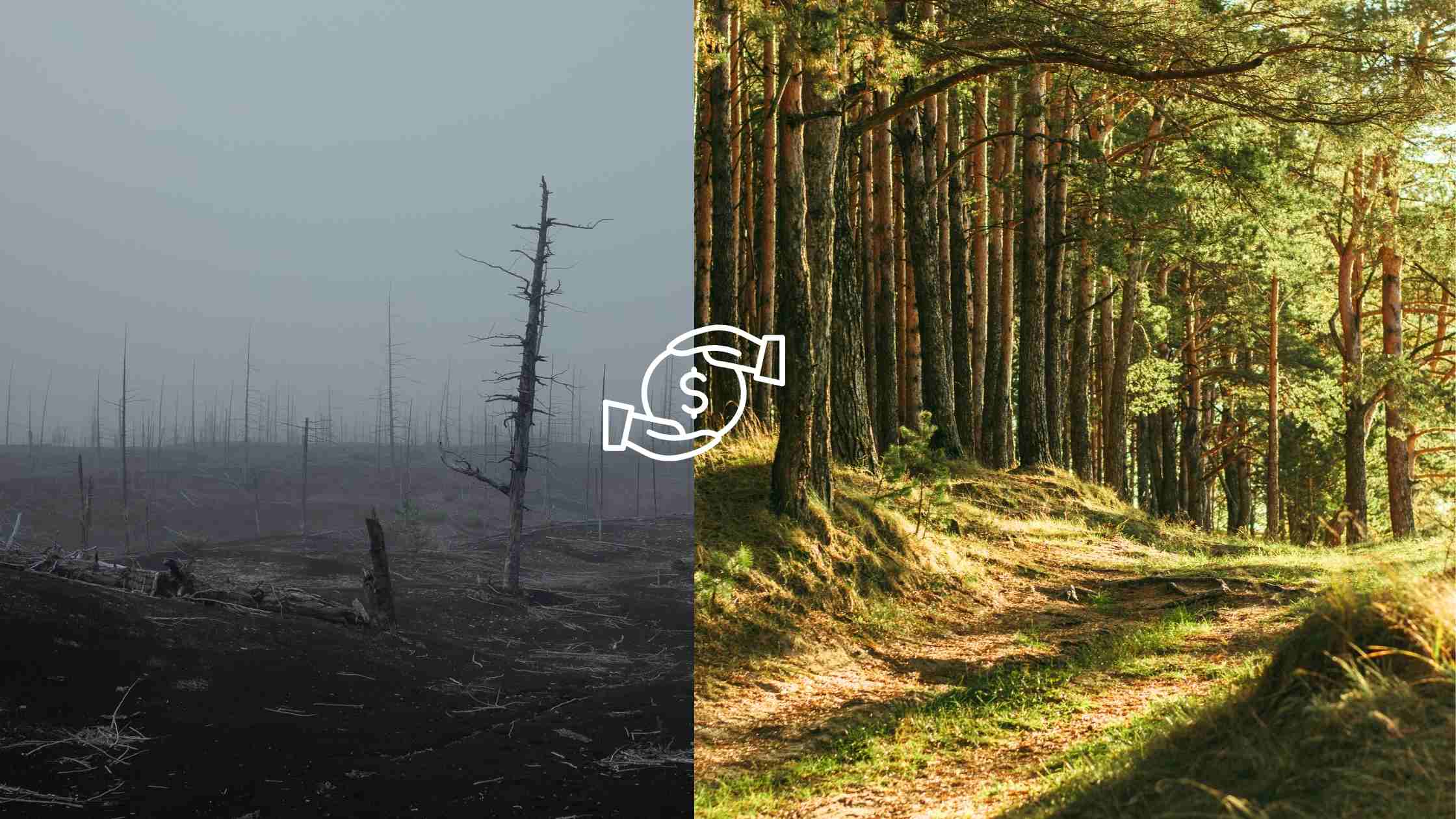
When we work with nature, every cent counts. 💰
Grants are like a long-awaited rain after a dry season. They help projects grow, slowly but surely.
Whether it’s restoring mangroves, protecting vaquitas, or building tools to monitor wetlands, this kind of support often plays a decisive role in launching or scaling an ecopreneur venture.
What this type of impact funding looks like
Grants for nature are funds offered to projects that protect or restore the living world, with no repayment, no equity, and no strings attached.
You’re supported because your work or research creates impact, not because you promise a fast financial return.
In this kind of impact funding, the money usually comes from foundations, public agencies, private companies, or international programmes.
How does it work in practice?
You submit an application, you show the real-world needs your project addresses, you outline your impact goals, your action plan, and how every cent will be used.
The organisations behind these grants review the applications, select the projects with the clearest impact and the most coherent budget, then release the funds.
In short: grants are a precious boost to launch or accelerate your ecopreneur project without giving up your independence.
Examples of how to get funding for a business through grants
Some grants have become essential stepping stones for ecopreneurs.
They help nature projects take their first steps on the ground, test an idea, or simply keep growing.
1️⃣ The Rufford Foundation is a common starting point for early-stage conservation projects. Their small grants have helped countless initiatives get started.
2️⃣ The Van Tienhoven Foundation also supports wildlife and ecosystem protection projects, often led by local teams working in high-value ecological areas.
3️⃣ And for those wondering how to get funding for a business in a biodiversity-rich region, the Critical Ecosystem Partnership Fund (CEPF) offers targeted support in some of the world’s most threatened hotspots.
These programmes bring far more than money.
They offer credibility, community, and sometimes the kind of opportunity that can shift the entire trajectory of a nature venture.
2. Impact investors, another way to get funding for a business

When you talk to traditional investors, nature-focused projects can sometimes feel like strange creatures emerging from an enchanted forest. 🧚🏻
Impact investors, on the other hand, seek exactly these kinds of initiatives. Ideas that restore, regenerate, and strengthen the living world.
For ecopreneurs exploring how to get funding for a business without compromising their impact, this path can open real doors.
What are impact investors?
Impact investors are people or organisations who fund projects that create measurable benefits for the planet while standing on solid economic legs.
They’re interested in a wide range of environmental solutions. From biodiversity protection to sustainable materials, climate adaptation tools, circular models, clean energy, community resilience, or nature-positive tech. 🧑🔬
Anything that helps the living world move in the right direction.
They don’t operate like traditional investors chasing explosive growth.
Here, we’re in the realm of impact funding: impact investing with patient capital, long-term thinking, and a sharp focus on the value your project creates beyond profit.
To collaborate with them, you need two things:
✔️ A clear explanation of the positive impact your project delivers
✔️ A business model that can keep going over time.
Examples of impact investors
In the impact investor world, some actors stand out for their long-term vision and concrete support for projects that genuinely serve nature.
🌴 Planetary Impact Ventures, for example, works through two funds:
✔️ A Venture Fund, which invests in regenerative businesses
✔️ A Soil Fund, which buys land and leases it to managers committed to sustainable practices
During his masterclass at Wildya, Morten Koefoed (partner at Planetary Impact Ventures) highlighted a key point: Patient funding, aligned with ecological needs can help a project at its launch, but also throughout its expansion!
🌊 On the ocean side, Rypples backs founders who develop solutions that already protect marine ecosystems.
No promises. No maybes. Just practical, proven impact.
During his masterclass, Jerome Ternynck (co-founder of Rypples) shared his best advice for convincing an investor: Clarity, proof of impact, and a model that has already demonstrated its resilience outside the pitch deck.
Impact investors are looking for coherent, credible projects with tangible impact. A valuable path for anyone exploring how to get funding for a business while protecting nature.
If you want more tips about building or scaling your nature ventures, check out our Impact Millionaires Newsletter!
3. Crowdfunding for nature ventures

For some nature projects, sometimes the easiest answer to the question of how to get financing for a business comes from those who already believe in your mission.
An engaged community that supports you financially through small donations!
How crowdfunding works
Crowdfunding allows you to raise money directly from the public, without going through banks or traditional investors.
You present your project, set a financial target, build a campaign around it, and an engaged community contributes. Sometimes with a few euros, sometimes much more.
It’s a type of impact funding that’s highly accessible for nature ventures: conservation initiatives, responsible eco-tourism, climate tools, biodiversity tech, low-tech innovations…
Almost everything works as long as the story is clear and the impact easy to understand.
To succeed, you need a solid donation page on your website, a simple explanation of your impact, a good reason to believe in and support your mission, a straightforward way to send money, and, of course, a community ready to back you!
And if you want more people to discover your project before or during your crowdfunding, one thing matters more than anything: attracting the right customers.
Crowdfunding depends heavily on visibility, storytelling… and having customers who care about what you’re building.
If you want to get customers before launching your campaign, we wrote something just for you.
Real examples of how to get funding for a business through crowdfunding
Multiple platforms allow nature projects to raise funds quickly by mobilising the public. 👨👩👦👦
1️⃣ GoFundMe is ideal for gathering donations around an environmental cause or local action.
2️⃣ For more technical projects or prototypes, Kickstarter is a solid option for testing public interest.
3️⃣ And in Europe, Ulule supports many ecological, social or innovative initiatives. A practical option when you’re figuring out how to get funding for a business with the help of your community.
Three platforms, three simple ways to transform public support into a real financial momentum.
4. Accelerators and venture studios offering impact funding
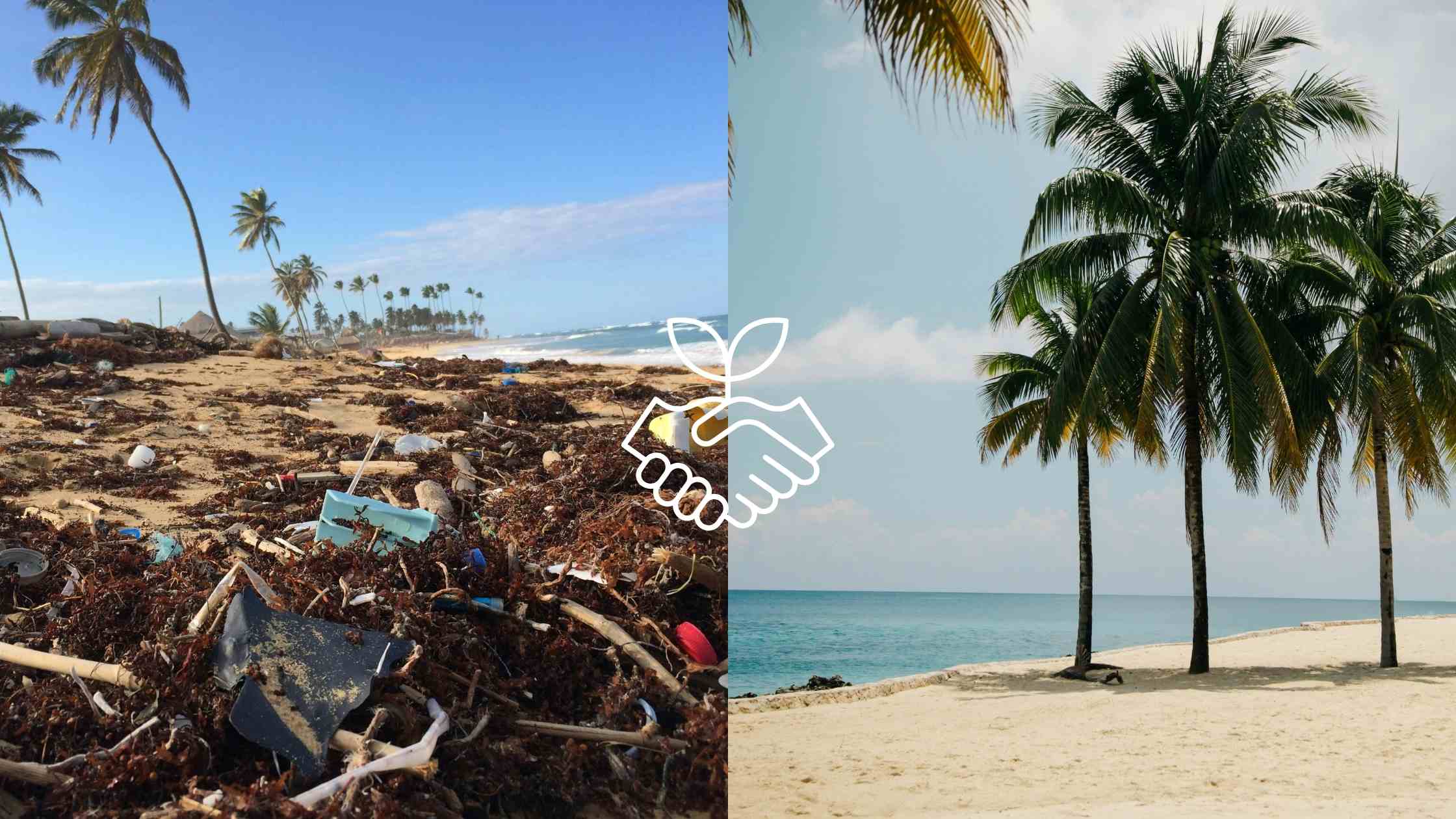
For ecopreneurs, accelerators and venture studios can be real springboards: they provide funding, but also time, tools, and the right people to help you move forward faster.
A rare combination in the world of impact funding!
How accelerators and venture studios fund ecopreneurs
Accelerators often offer a small amount of initial funding, but their real value is elsewhere.
They help you move fast.
With regular feedback, mentors who challenge and guide you, and a network that lets you test your projects without waiting months.
Venture studios work a bit like teammates.
They bring skills you wouldn’t have been able to afford on your own, a method to avoid unnecessary detours, and sometimes a budget to build the first versions of your solution or run a pilot on the ground.
In both cases, it’s a very practical form of impact funding: a mix of money, expertise, and hands-on support that saves months for a nature venture.
How to get funding for a business using accelerators and venture studios
For accelerators, the entry is often done through a simple application: your idea, your prototype, and the change you want to create for nature.
For venture studios, a concrete example is Feral Ventures.
John, its founder, explained this month during a masterclass at Wildya how his studio builds startups: testing quickly, killing what doesn’t work, keeping the ideas that actually take root.
His demo → sell → build approach helps validate a solution in the real world before investing too much, all grounded in real experiments and a regenerative mindset.
5. Philanthropic foundations supporting conservation and biodiversity

Some foundations fund nature ventures simply because they want to protect the living world, with nothing expected in return.
You might think: Wait… People really do that?
Yep! It’s a valuable path in the world of impact funding, especially if you’re building a solution that directly supports ecosystems, species or local communities.
What is it?
Philanthropic foundations fund projects that protect the living world simply because they believe in their value.
They support habitat restoration, biodiversity research, climate solutions, species protection, and community-led conservation work that would struggle to attract traditional investment.
Unlike investors, Philanthropic foundations don’t ask for equity or repayment.
We’re clearly in impact funding: money offered to create benefits for the planet, not to generate profit. 🌳
To receive this kind of support, you need a clear problem statement, measurable impact goals, and a transparent budget that shows exactly how the funds translate into action.
The foundations then select the initiatives with the strongest ecological potential, the ones where every cent can unlock real change on the ground.
Examples of philanthropic foundations
Some philanthropic foundations play a key role in supporting nature projects, especially when it’s too early to attract impact investors.
1️⃣ The Gordon and Betty Moore Foundation funds large-scale conservation programmes: tropical forests, wetlands, marine ecosystems, and other threatened habitats.
2️⃣ The Rockefeller Foundation supports initiatives linked to climate resilience, sustainable food systems, energy transition, and innovative environmental solutions.
3️⃣ And finally, for ecopreneurs wondering how to get funding for a business focused on conservation or climate, the National Geographic Society offers grants for projects combining exploration, research, storytelling, and nature-positive innovation.
Three examples among many others, all sharing one thing: financial support designed to amplify your impact, not to take a piece of your company.
6. Awards for ecopreneurs, an underestimated way to get funding for your green business

Some awards shine a light on projects that push boundaries to protect nature, often offering a real financial boost along the way.
And winning one can sometimes be the most surprising (yet incredibly efficient way) to explore how to get funding for a business that serves nature.
How awards provide impact funding
Awards support nature projects in two ways:
🏅 A financial reward
🏅 A spotlight that can attract partners, donors, or even investors after the competition
For many ecopreneurs, it’s one of the most accessible paths at the beginning, especially when you’re figuring out how to get funding for a business without dealing with long technical processes.
Most awards ask for a short application: your mission, your impact, and why your project matters. Nothing complicated.
Juries look at your ecological impact, the strength of your idea, and your ability to bring it to life.
And even without winning, being a finalist can already shift everything: credibility, visibility, and access to networks that open doors.
A little spotlight, sometimes, is worth as much as a big cheque. 🏆
Examples of awards
Many awards recognise projects that create real, measurable impact for the planet. It’s a genuine opportunity when you’re exploring how to get funding for a business focused on nature.
🥇The Earshot Prize is one of the most famous: it funds ambitious solutions to restore nature, protect the oceans, clean the air, or regenerate ecosystems. Finalists gain just as much in visibility as in financial support.
🥈The Young Champions of the Earth prize from UNEP supports young innovators with environmental projects, offering both funding and high-level mentoring.
🥉And the Whitley Award (often called the “Green Oscars“) celebrate impactful conservation projects led by emerging leaders from around the world, with significant financial backing.
Three awards, three ways to give your project visibility, credibility, and the kind of support that can accelerate your nature venture.
Finding how to get funding for a business focused on nature often means exploring several paths, not just one.
The key is choosing the option that matches where you are in your project, the impact you’re creating, and the time you can commit.
Grants to start
Investors to grow
Crowdfunding to mobilise
Studios to accelerate
Awards to gain in visibility…
Each option has its own strength!
In this ecosystem, impact funding works like a lever. It allows you to act now without sacrificing your ambition or your values.
But to unlock it, you need to clearly show your impact, explain your needs, and show how your solution brings positive change.
And if you haven’t started your business yet, but feel that spark and want to turn your idea into a real nature venture, this is your moment.
The Ecopreneur Beginner Bootcamp helps you validate your idea, build your business model, create your offer, set up your marketing, and finally score your first revenue… all in just 8 weeks!